
Key Takeaways
- An educational hub is a structured library of resources — guides, tools, calculators, case studies — designed to answer every question a prospect asks before they are ready to buy.
- B2B buyers consume 13.4 pieces of content on average before contacting sales, and 67% of the buying journey is now self-directed. Your educational hub is the infrastructure that serves that research.
- Companies with an organized resource library convert visitors at measurably higher rates than those with scattered blog archives. Structure, not volume, is the conversion variable.
- The best educational hub content answers specific questions at specific funnel stages. A guide that helps a prospect make a decision sells more effectively than a guide that simply informs.
- An educational hub is not a blog. It is a navigable resource library organized by topic, audience, and funnel stage — with lead capture built into every asset.
- For financial services and real estate professionals, an educational hub is the infrastructure that makes expertise visible, measurable, and convertible into inbound leads.
Table of Contents
An educational hub is the content asset that sells before your sales team ever enters the conversation. While most businesses think of content as a way to generate awareness, the professionals and firms generating consistent inbound leads have figured out something more precise: that a well-structured library of educational resources, organized by topic and funnel stage, functions as a 24-hour sales engine that qualifies prospects, answers objections, and builds trust before the first call is ever scheduled.
B2B buyers consume an average of 13.4 pieces of content before contacting sales, and 67% of the buying journey is now entirely self-directed. That means the majority of the purchase decision is made before any human sales interaction occurs. The companies and professionals that win are the ones whose educational content is present, useful, and organized at every stage of that self-directed research. The ones who lose are the ones whose content is scattered, inconsistent, and impossible to navigate.
According to Nielsen Norman Group’s research on content usability, users who encounter a well-organized educational resource library spend significantly more time engaging with content, visit more pages per session, and return at higher rates than users who encounter unstructured blog archives. For mortgage companies, real estate firms, financial advisors, and real estate coaches, those engagement metrics translate directly into trust, authority, and ultimately into inbound leads that fill the pipeline without a single outbound call.
Explore how we build educational hubs: Explore How We Do It
What an Educational Hub Is — and What It Is Not
An educational hub is not a blog. A blog is a reverse-chronological feed of posts. An educational hub is a navigable library organized by topic, audience type, and funnel stage — where every resource is intentionally placed to serve a specific prospect at a specific moment in their research journey. The distinction matters because a blog rewards frequent visitors who follow along, while an educational hub rewards first-time visitors who arrive with a specific question and need to find a specific answer.
A resource library strategy for financial services treats the educational hub as a sales infrastructure asset, not a marketing output. Every guide, tool, calculator, case study, and FAQ document in the hub serves a defined purpose: it answers a question a prospect is asking, reduces a specific objection, or demonstrates a specific capability. Content that does not serve one of those three functions does not belong in the hub, regardless of how well it is written.
An effective educational hub has five defining characteristics: organized by topic not date, covers every buyer journey stage, has lead capture on every asset, is navigable enough that any prospect can find related resources in two clicks, and is updated regularly enough to signal current information.
For the content architecture that sits behind an effective educational hub — the pillar-cluster structure, keyword targeting, and publishing infrastructure — see the Content System Blueprint for Financial Brands.
Why an Educational Hub Converts Better Than a Blog Archive
The fundamental difference between an educational hub and a blog archive is navigability and intent alignment. A blog archive is organized by the date content was published — which is useful for the publisher but meaningless to the prospect. A hub and spoke content structure is organized by the question the prospect is trying to answer, the stage of research they are in, and the decision they are trying to make. That alignment between content organization and prospect intent is what drives the conversion advantage.
A mortgage broker prospect who arrives on a blog sees posts in reverse chronological order with no clear path to specific information. A prospect who arrives on an educational hub organized by loan product and borrower type has a clear, frictionless path to exactly what they need.
That navigability is measurable. According to research from the Nielsen Norman Group, users who can find relevant content within two clicks are 3.4x more likely to convert to a lead than those who cannot. The educational hub structure is specifically designed to ensure that any prospect, arriving with any specific question, can reach relevant content within two to three clicks from the hub homepage.
The 5 Content Types That Make an Educational Hub a Sales Tool
1. Guides and Frameworks
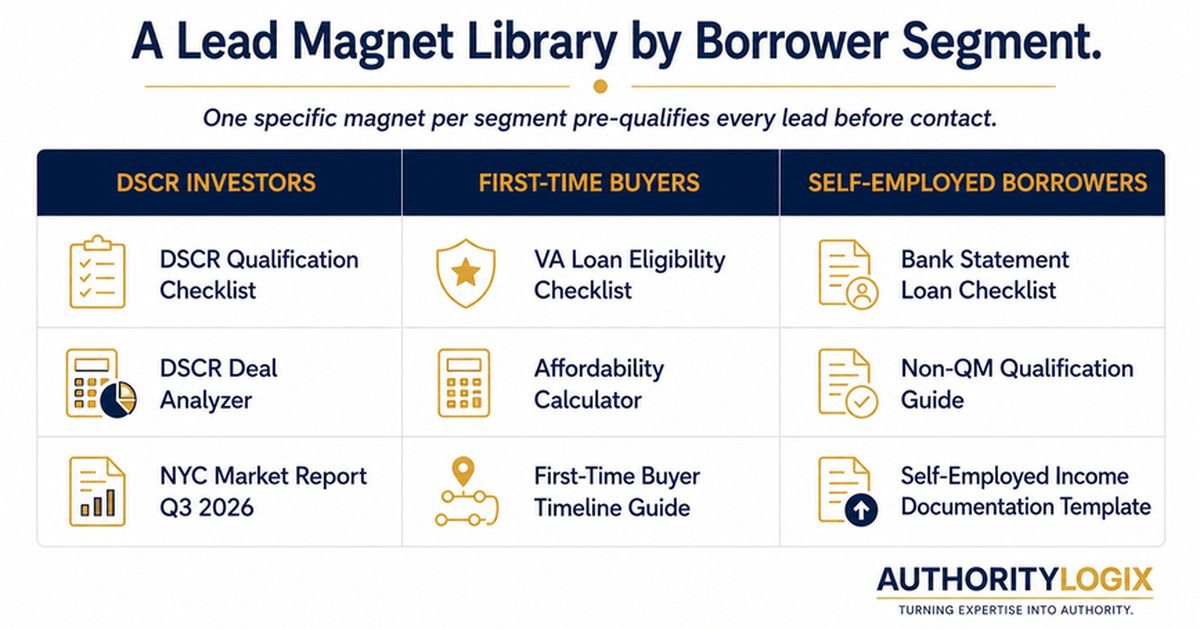
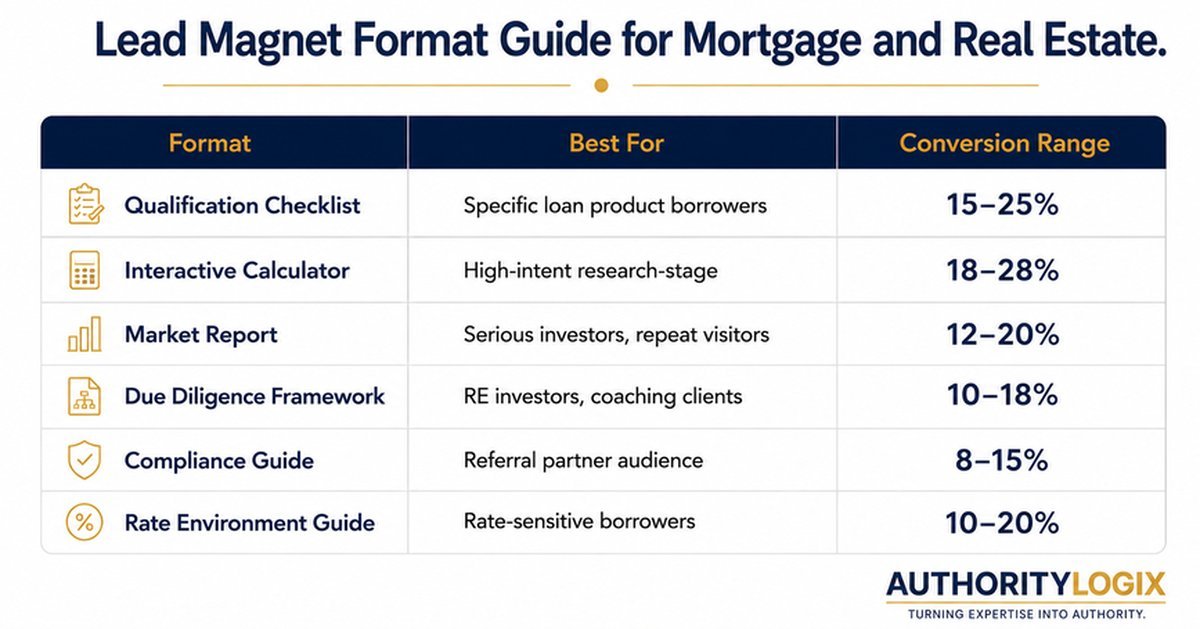
Comprehensive guides that walk a prospect through a specific process or decision are the backbone of an effective educational content system. A mortgage company guide to DSCR loan qualification, a real estate coach’s framework for evaluating a first investment property, or a financial advisor’s guide to evaluating real estate syndications — each answers the specific decision a prospect is trying to make and positions the publisher as the expert who understands that decision better than anyone else.
2. Tools and Calculators
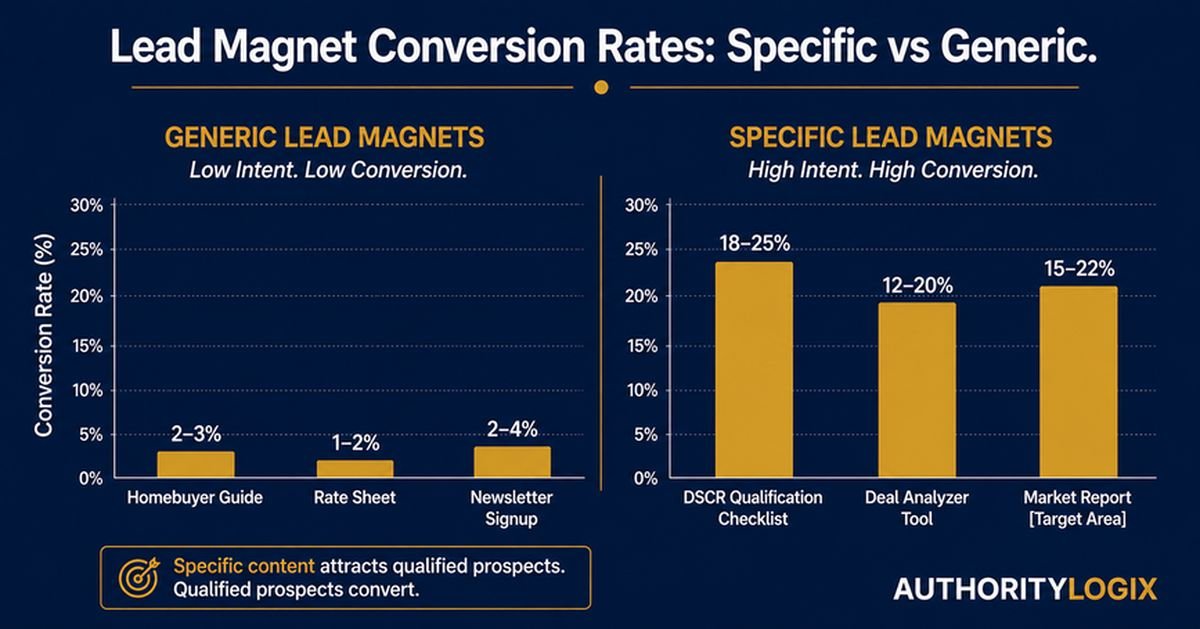
Interactive tools convert at disproportionately high rates because they provide immediate, personalized value. A borrower who uses your DSCR calculator has self-identified their loan type, entered their deal specifics, and received a personalized result — all before submitting any contact information. A well-built lead generation system for financial services and real estate places calculators and interactive tools at the highest-traffic points in the educational hub, with email capture integrated into the result experience. The email capture that follows the calculator result converts at 15 to 25% because the user has already received something of genuine value.
3. Case Studies
Case studies are the highest-converting educational hub content type for financial services because they demonstrate competence through evidence rather than claims. A mortgage company case study that details a specific deal — borrower profile, loan product, qualification challenge, deal structure, closing timeline — tells the prospect reading it more about that lender’s capabilities than any amount of marketing copy ever could. B2B buyers consistently rank case studies as one of the top three most influential content formats in their purchase decisions.
4. Market Reports and Data
Original market data that your target audience cannot easily find elsewhere is among the most powerful lead generation tools in an educational hub. A quarterly report on DSCR lending conditions in your target market, a local housing market analysis that investors cannot get from Zillow, or a benchmarking report on investment returns by property type positions your firm as a data source that prospects return to repeatedly. The authority distribution layer amplifies this data beyond your own hub — syndicating market reports to third-party platforms builds backlinks and brand recognition simultaneously.
5. FAQ and Definitions
FAQ content is underrated as a sales tool. The prospect who searches for the definition of DSCR, the difference between non-QM and conventional loans, or how a 1031 exchange works is in the earliest stages of their research. FAQ content that appears in search results for those definitional queries captures early-stage prospects before they have formed any lender or advisor preferences. The educational hub that owns the definitional content in its niche is building the prospect relationship months before competitors ever enter the picture.
Before you build, know where the gaps are: Download the free Authority Gap Assessment
How to Structure Your Educational Hub for Maximum Conversion
The structure of an educational hub determines whether it functions as a sales tool or a content archive. Every financial services and real estate educational hub should have at minimum four navigational layers: Audience (who this content is for), Topic (what question this content answers), Format (guide, tool, case study, report), and Funnel Stage (awareness, consideration, decision). A prospect should be able to self-select into the right section within two clicks of arriving on the hub homepage.
The lead capture strategy for an educational hub differs from a blog lead capture strategy. The how we do it approach places lead capture inside the resource experience itself — a downloadable version of a guide, an email gate on a calculator result, a gated data report. Every asset in the hub has its own tailored lead capture mechanism, matched to the specific audience and intent of that asset.
An educational hub not updated in 12 months signals stale information to both search engines and visitors. For financial services, market data and regulatory content must reflect current conditions. A quarterly audit and update cycle is the minimum maintenance standard.
3 Educational Hub Mistakes That Kill Conversion
Building a Hub Without Lead Capture on Every Asset
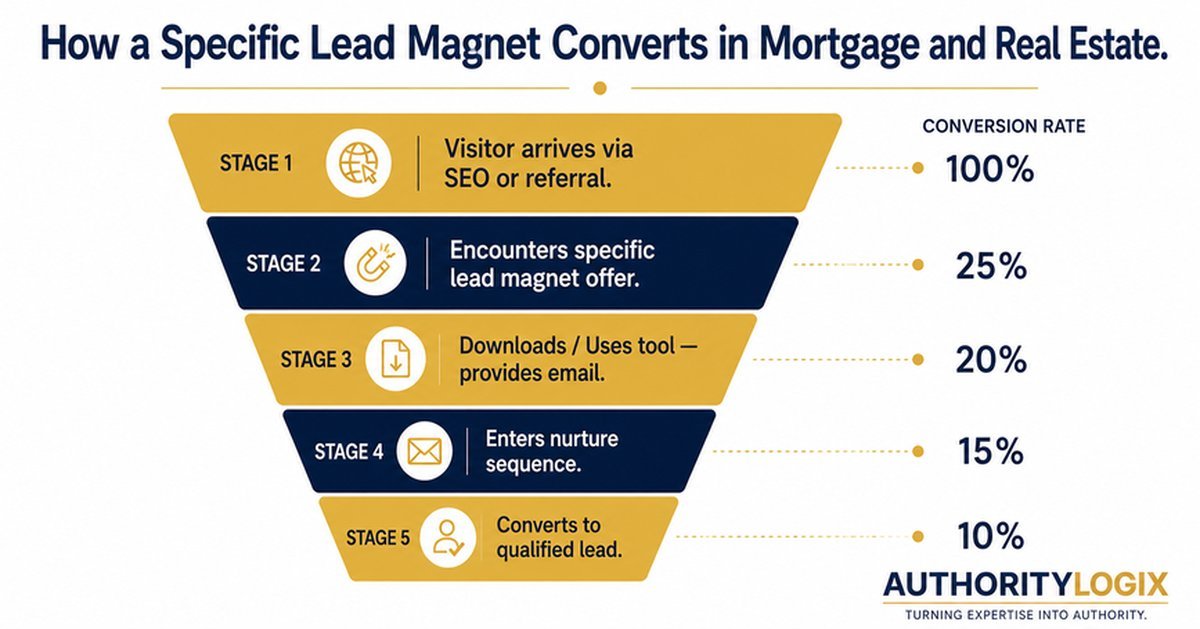
An educational hub full of ungated resources that has no lead capture mechanism is a content library, not a sales tool. Every asset in the hub should have at minimum one lead capture mechanism — a downloadable version, a related tool that requires email access, or a contextual CTA to a relevant consultation. The prospect who reads a comprehensive guide and leaves without submitting any contact information has consumed your content without entering your pipeline. Building lead capture into every asset closes that gap.
Organizing by Content Type Instead of Prospect Need
Organizing an educational hub by content type — Guides, Videos, Calculators, Blog Posts — is organizing for the publisher’s convenience, not the prospect’s need. A prospect does not arrive looking for a guide. They arrive looking for an answer to a specific question. An educational hub organized by prospect question and funnel stage ensures that every visitor can find the most relevant resource for their specific situation without navigating through unrelated content.
Letting the Hub Go Stale
A mortgage rate guide published in 2023 that has not been updated for 2026 conditions undermines trust rather than building it. For financial services and real estate professionals, content accuracy is a credibility signal that prospects actively evaluate. The BKDSCR.com proof-of-work case study demonstrates this maintenance discipline in practice — every tool, guide, and resource on the platform reflects current market conditions and is updated as conditions change.
For the complete content-to-client system that connects the educational hub to lead capture, nurture, and conversion, see the Finance Content Playbook: How Lenders, Advisors, and Real Estate Firms Turn Content Into Clients.
Why the Educational Hub Becomes More Valuable Over Time
Unlike a brochure website or a static service page, an educational hub compounds in value with every piece of content added to it. Each new article strengthens the topical authority of the hub in search engines. Each new tool or calculator provides an additional entry point for prospects at the moment of highest intent. Each new case study deepens the credibility profile that decision-stage prospects evaluate before committing to a relationship. The hub that has been built and maintained for 24 months is not just twice as valuable as it was at 12 months — it is exponentially more valuable, because each new asset benefits from the authority accumulated by every prior asset.
For financial services and real estate firms that have historically relied on referrals and personal relationships to generate business, the educational hub represents the first scalable, ownable, compounding business development asset they have ever built. It works while the firm sleeps, reaches prospects the referral network never touches, and grows more effective every month it operates.
The financial services and real estate firms that invest in building educational hubs today are making a decision that will compound for years. Every piece of content added to the hub makes every prior piece more valuable. Every lead captured through the hub is a prospect who chose to engage with the firm’s expertise before any sales conversation began. Every client acquired through the hub arrives with a level of pre-existing trust that no cold outreach or referral handoff can replicate. The educational hub is not just a marketing asset — it is the infrastructure that transforms how the firm grows.
The educational hub built for a financial services or real estate firm is the single most effective business development investment available. It reaches prospects the referral network never touches, qualifies them before any human conversation, and builds trust through demonstrated expertise over weeks and months of content engagement. No other marketing channel produces equivalent results at equivalent cost over a 24-month investment window.
The educational hub is not a project — it is a permanent business development infrastructure that compounds with every asset added, every lead captured, and every client acquired through its conversion paths. Financial services and real estate firms that build educational hubs are not just investing in marketing. They are investing in the most durable, scalable, and cost-effective client acquisition system available in their sector.
The financial services and real estate businesses that build educational hubs and maintain them consistently over 24 months transform their market position permanently. They move from being one of many options a prospect evaluates to being the recognized authority their ideal clients seek out. That position — built through consistent expertise distribution and systematic lead capture — is the most valuable asset a financial services or real estate firm can own in 2026 and beyond.
Ready to build your educational hub? Book a free Authority Gap Assessment
Building an Educational Hub That Compounds Over Time
An educational hub is not a project with a completion date. It is infrastructure that grows more valuable as it expands. Each new guide added to the hub strengthens the topical authority of the entire library. Each new tool creates a new lead capture entry point. Each updated market report gives returning visitors a reason to come back and re-engage. The compounding dynamic of a well-maintained educational hub is one of the most powerful in content marketing.
For mortgage companies, real estate firms, financial advisors, and real estate coaches, the educational hub is the content asset that does the most work per dollar invested. A guide published today on DSCR loan qualification will still be generating leads and building trust three years from now. The AuthorityLogix resource hub you are reading from right now is the proof of concept — a structured library of resources organized to convert at every entry point.
The firms and professionals that build their educational hubs now are establishing a content asset that no competitor can replicate overnight. The library takes time to build. But once built, it works continuously — attracting the right prospects, answering their questions, building trust at scale, and converting attention into inbound leads without a single outbound call.