


Key Takeaways
- A mobile SEO real estate website is built for the version Google actually reads — Google uses the mobile version of a site’s content, crawled with the smartphone agent, for indexing and ranking.
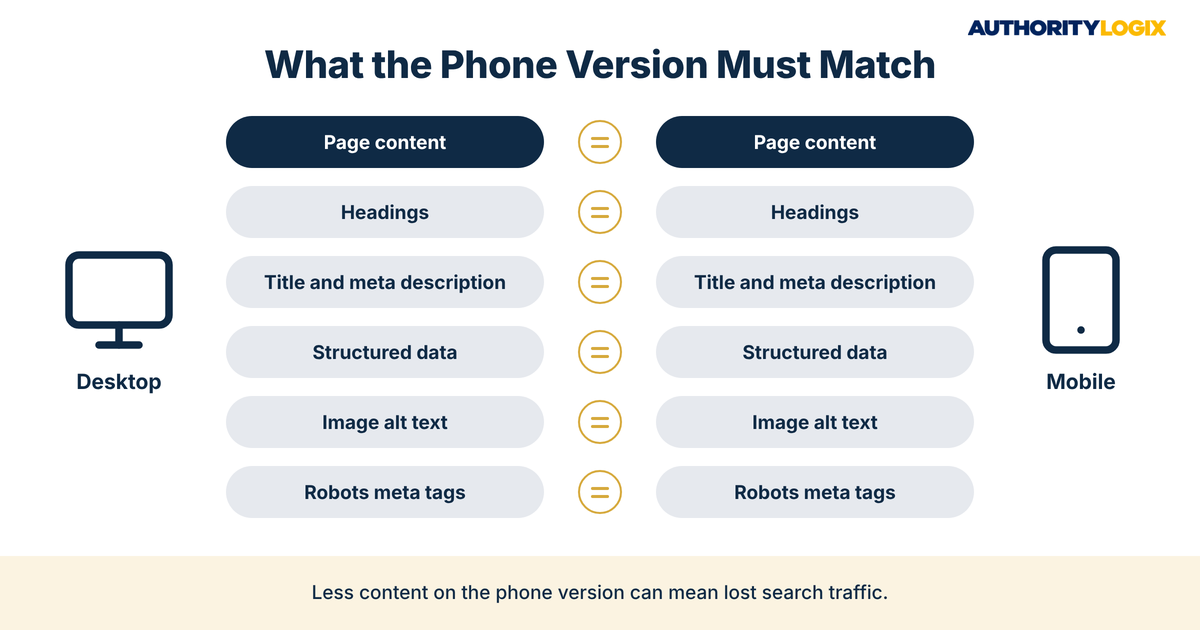
- Google warns that a site whose phone version carries less content can expect some traffic loss.
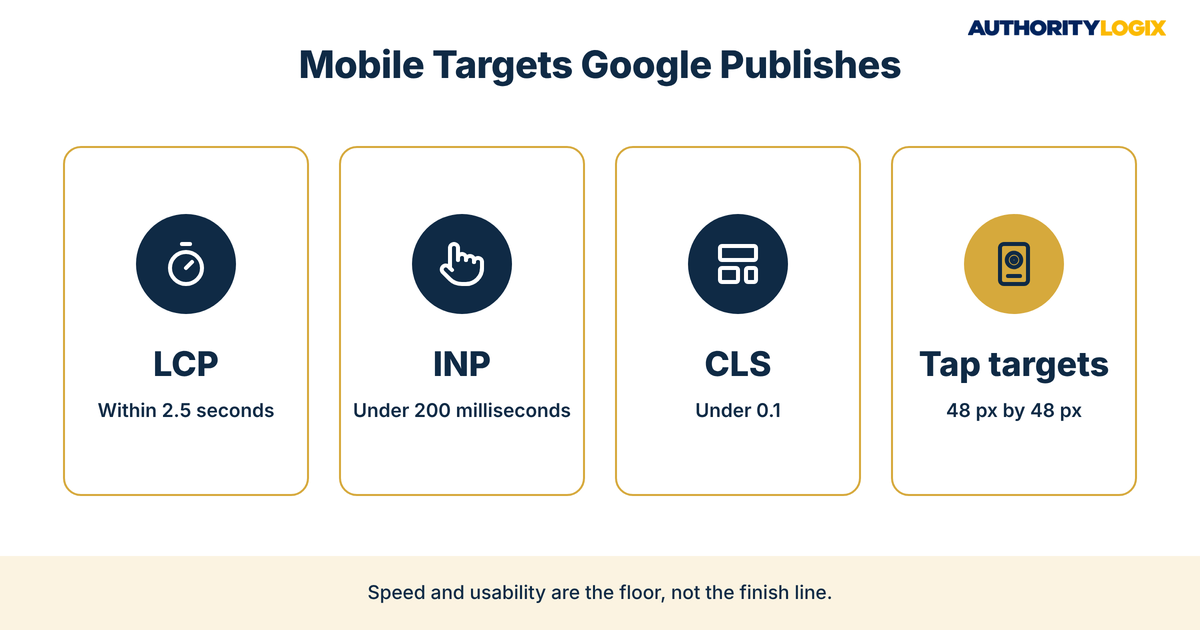
- Google’s Core Web Vitals targets are a Largest Contentful Paint within 2.5 seconds, an Interaction to Next Paint under 200 milliseconds, and a Cumulative Layout Shift under 0.1.
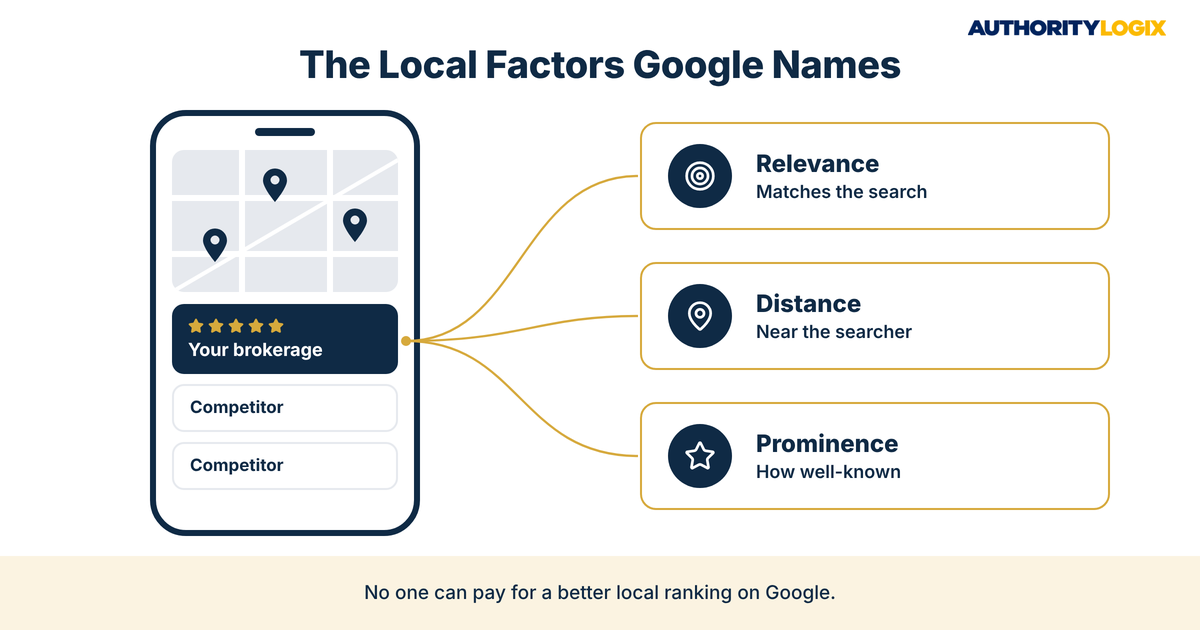
- Google names relevance, distance, and prominence as the main local ranking factors, and says no one can pay for a better local ranking.
- Google retired its Mobile Friendly Test in December 2023, so a mobile SEO real estate website audit now means Lighthouse checks plus testing on a real phone.
- A mobile SEO real estate website fix removes a handicap; it does not replace the content and authority work that wins the search.
Table of Contents
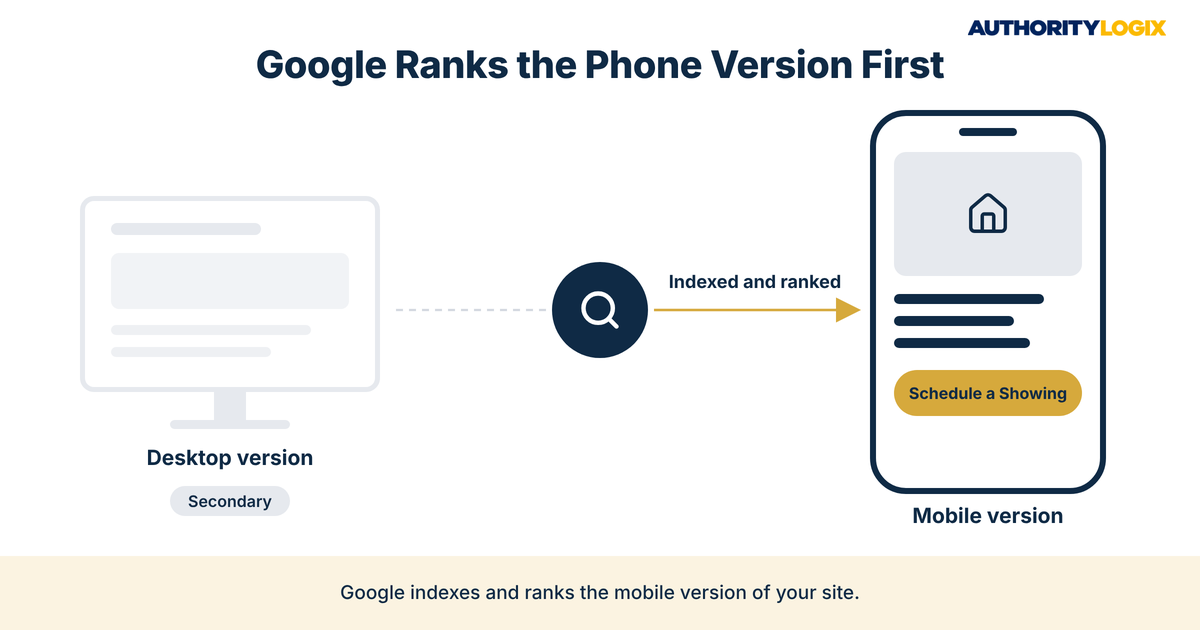
A mobile SEO real estate website is no longer a second copy of your site; it is the version Google reads and ranks. You may have closed hundreds of deals and carry a referral list most agents would envy, yet the site Google evaluates is the one a buyer sees on a phone. The real estate industry hub shows how AuthorityLogix connects that phone version to the rest of a firm’s visibility system.
This guide covers what Google checks on the phone version, how listings and forms behave on a small screen, how the map pack fits in, and how to test your site the way a buyer does. No part of mobile SEO real estate website work guarantees a ranking position, and Google says plainly that local rankings cannot be bought.
What Mobile SEO Real Estate Website Owners Need Under Mobile-First Indexing
Start with the professional reality. Most established agents and brokers built their sites on a desktop monitor and still edit them there, leaving the phone version to the theme. Under mobile-first indexing that order is backwards, because the phone version is the one being evaluated, and a mobile SEO real estate website plan begins by treating it as the primary site.
This is the credible but invisible problem in technical form. A broker with twenty years of closings can lose search visibility to a newer competitor whose site was built for phones. Earned credibility only shows up in search when the infrastructure underneath it is sound, the argument at the center of the authority guide.
In practice, a mobile SEO real estate website needs four things in place. The phone version has to carry the same content as the desktop version, load and respond quickly, show listings and maps without fighting the screen, and make contact easy with one thumb. Each one affects what Google sees or whether a buyer stays.
Firms rarely fail on all four; they fail on one, quietly, because nobody browses their own site on a phone. Finding that weak point and fixing it inside a connected system is what we do for real estate firms with expertise but no search position to match it.
The Real Estate Local SEO Playbook shows where a mobile SEO real estate website fits inside the full local search system — profile, pages, reviews, and content working together.
Agent Website Mobile First Indexing: Google Ranks the Phone Version
Google removes any doubt about which version matters. According to Google Search Central, “Google uses the mobile version of a site’s content, crawled with the smartphone agent, for indexing and ranking.” In October 2023, Google’s Search Central blog followed up with a post titled “Mobile-first indexing has landed.”
For agent website mobile first indexing, the meaning is simple: anything that exists only on the desktop version is invisible to the version Google ranks. A market report hidden from the mobile theme or a sold-listings archive that never loads on a phone is content Google cannot weigh. Google’s documentation is direct about the cost, warning that a site whose mobile version carries less content can expect some traffic loss.
Content Parity on a Mobile SEO Real Estate Website
Google’s documentation lists what should match between the two versions, including parts a buyer never sees but Google reads on every crawl. A mobile SEO real estate website that matches on all of them gives Google the full picture of the firm.
| What Must Match | Google’s Guidance | Where Real Estate Sites Slip |
|---|---|---|
| Page content | Same content as the desktop site | Market reports trimmed from the mobile theme |
| Headings | Same clear and meaningful headings | Headings dropped to save space |
| Title and meta description | Equivalent on both versions | One generic title on every mobile listing |
| Structured data | Same structured data on both | Listing markup only on desktop templates |
| Image alt text | Same alt text for images | Alt text lost in the mobile gallery |
| Robots meta tags | Same robots meta tags on both | A stray noindex on a mobile template |
Most parity problems come from themes and plugins hiding page sections on small screens. Preventing that drift is a publishing discipline as much as a technical one, which is why one responsive template for every page belongs inside the content systems a firm runs.
Parity also shapes what you publish next. Every market update and buyer guide should be written once and published once, so the two versions never drift apart. The publishing structure behind that habit is laid out in the content system blueprint, and it keeps a mobile SEO real estate website consistent without a quarterly audit.
Real Estate Mobile Search Optimization for Listings, Maps, and Forms
Real estate mobile search optimization is where technical rules meet how buyers actually use a site. A phone visitor swipes a gallery, pinches a map, and decides quickly whether the contact form is worth the effort. Each of those moments is a place where a mobile SEO real estate website either holds the visitor or sends them back to the search results.
Listing Pages That Hold Up on a Small Screen
Listing pages carry the heaviest load on a real estate site: photo galleries, maps, calculators, and IDX feeds. Google’s documentation warns against images that are too small or low resolution on the mobile site, and against lazy-loading primary content that only appears after a user interaction. Listing details that only load after a tap are exactly the kind of content that rule is about.
Area and market content needs the same care. Pages built around a specific market, the kind covered in the guide to neighborhood pages, often get folded into tabs that load on demand. Keep the full text loading without a tap, and a mobile SEO real estate website keeps the local depth that earns those rankings in the first place.
Pop-ups deserve their own warning. Google’s guidance on intrusive interstitials says interrupting users with them may frustrate them and erode their trust in your website, and a full-screen listing-alert overlay on a phone is exactly that interruption.
Maps and forms are the final step. A map that traps the scroll or a form with a dozen tiny fields turns a ready buyer into a lost visit. Short forms, tap-to-call numbers, and one clear next step are the mobile side of lead generation, and they decide whether visibility becomes a client conversation.
Not sure where your mobile SEO real estate website stands? The RE Authority Gap Assessment shows where your phone version, local profile, and content are weakest — and what to fix first.
Broker Mobile Search Rankings and the Local Map Pack
Broker mobile search rankings are decided as much by the map pack as by the organic results below it. A phone search for a brokerage in a specific town often shows a map and a short list of profiles before any website link. Google names three main factors for those local results: relevance, distance, and prominence.
Google defines relevance as how well a Business Profile matches what someone is searching for, distance as how far the business is from the person searching, and prominence as how well-known the business is. Google adds that prominence draws on information such as how many websites link to your business and how many reviews you have. The profile side is covered field by field in the guide to your Business Profile.
The website is where a mobile SEO real estate website and the map pack meet. A profile that links to a fast, readable phone page confirms the searcher’s choice; one that links to a slow desktop-style homepage wastes the click. Every market page that earns a link from another website also adds to the prominence signal Google describes.
Google is also clear about what does not work: there is no way to request or pay for a better local ranking. That leaves accurate profiles, useful pages, and steady reviews as the only path to stronger broker mobile search rankings. Each piece of that local system has its own guide in the real estate resource library.
Testing Your Site the Way a Phone Buyer Uses It
Google retired its Mobile Friendly Test in December 2023, so there is no single pass-or-fail badge left to rely on. Testing a mobile SEO real estate website now means measuring it against Google’s published targets and using it on an actual phone the way a buyer would.
Reading Core Web Vitals for Agent and Broker Pages
Google’s Core Web Vitals measure loading, responsiveness, and visual stability, and Google publishes a target for each. The table pairs them with Lighthouse’s tap target guidance.
| Check | Published Target | On a Listing Page |
|---|---|---|
| Largest Contentful Paint (loading) | Within 2.5 seconds of the page starting to load | The lead photo appears fast |
| Interaction to Next Paint (responsiveness) | Under 200 milliseconds | Gallery swipes respond without lag |
| Cumulative Layout Shift (visual stability) | A score under 0.1 | Buttons stay put while widgets load |
| Tap target size | 48 px by 48 px never fails the Lighthouse audit | Buttons a thumb hits the first time |
| Tap target spacing | 8 px between targets as a starting point | Menu links not crammed together |
Treat those targets as a floor. Google says good page experience aligns with what its core ranking systems seek to reward, which is not a promise that the fastest page ranks first. Speed alone does not make a mobile SEO real estate website relevant, so speed work belongs inside a broader plan, in the order explained in how we build.
The manual test is simple. Pick up your own phone, switch off Wi-Fi, and search for your firm and your main market the way a buyer would. Open a listing, swipe the gallery, submit the form, and call the number. Every moment you pinch, wait, or tap twice belongs on your mobile SEO real estate website fix list.
Run the same test on your educational pages. Buyer guides and seller checklists in an educational hub attract early-stage visitors, and long pages are where wide tables and tiny fonts pile up. Fix the template once and every guide improves together.
Investor-facing material needs one extra check. Cap rate tables and deal breakdowns — the kind of investor content that pre-qualifies serious buyers — rarely fit a phone unless designed for it. BKDSCR.com, the AuthorityLogix proof-of-concept in the NYC outer-borough DSCR niche, carries 7 interactive investor tools, including a DSCR Calculator, and each only helps an investor if it works on a phone.
Mobile SEO Real Estate Website Mistakes and Common Questions
Most firms that struggle with mobile search are working from assumptions formed when phones were a secondary screen. These are the questions agents, brokers, and investment firms ask most often about a mobile SEO real estate website.
Is a responsive theme enough on its own?
A responsive theme is the right starting point, and Google recommends responsive web design because it is the easiest design pattern to implement and maintain. Plugins, pop-ups, and IDX feeds can still break parity or slow the page. A mobile SEO real estate website needs someone checking the output, not just the theme.
Do I need a separate mobile site?
Usually not. Google’s documentation says that with separate mobile URLs the desktop URL is always the canonical and the mobile version is the alternate, so every page has to be maintained twice.
Will a faster site beat Zillow or Redfin?
Not on speed alone. National portals have scale no local firm can match, but not a working agent’s market commentary and local judgment. A fast mobile SEO real estate website gives that local expertise a fair hearing, and the expertise is what earns the click.
Who should own mobile checks inside a brokerage?
Agents should own the expertise and someone else the system, because a busy agent will not retest after every plugin update. Mobile checks belong on the same schedule as publishing, which is how authority distribution work keeps every new article pointing to a page that holds up on a phone.
How do I know the mobile fix is working?
Watch what phone visitors do after they land, not just rankings. Once friction is gone, you would expect more calls and form submissions from a mobile SEO real estate website, and that capture path is the heart of any lead generation system. If rankings rise and calls do not, the next fix is further down the page.
Want a phone version Google reads in full and buyers use with one thumb? Let’s build the mobile foundation your local search depends on.
What a Mobile Fix Will and Won’t Change
A mobile fix removes a handicap. It makes sure Google sees all of your content and that profile clicks land somewhere credible. It does not create relevance or authority on its own, and a mobile SEO real estate website with nothing worth reading will still lose to one that has it.
What it does change is the return on everything built after it. Every page published on a sound phone version keeps working long after it goes live, which is the compounding effect the growth playbook is built around. Each asset adds to the last instead of starting over.
This is a system build, not a quick fix. Parity comes first, then speed, then the content that earns rankings, and that order explains why AuthorityLogix treats the phone version as the foundation of a mobile SEO real estate website build. BKDSCR.com, with 18 pillar pages, 48 SEO-optimized blog posts, and zero paid ads, was built on the same infrastructure-first approach.
The honest answer is that most agents and brokers already have the local knowledge buyers search for on their phones. What is usually missing is a phone version that lets Google and buyers see it, and a mobile SEO real estate website is the first piece of infrastructure that closes that gap.