


Key Takeaways
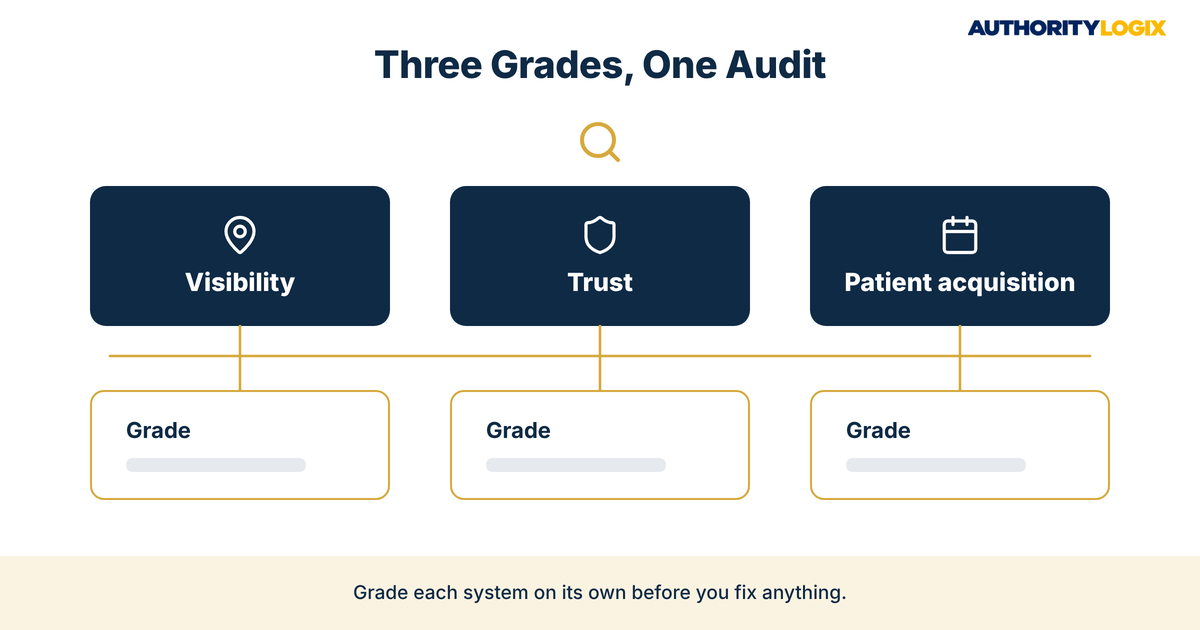
- A physical therapy marketing audit grades three systems separately — local visibility, trust signals and patient acquisition — so you can see which one is costing you new evaluations.
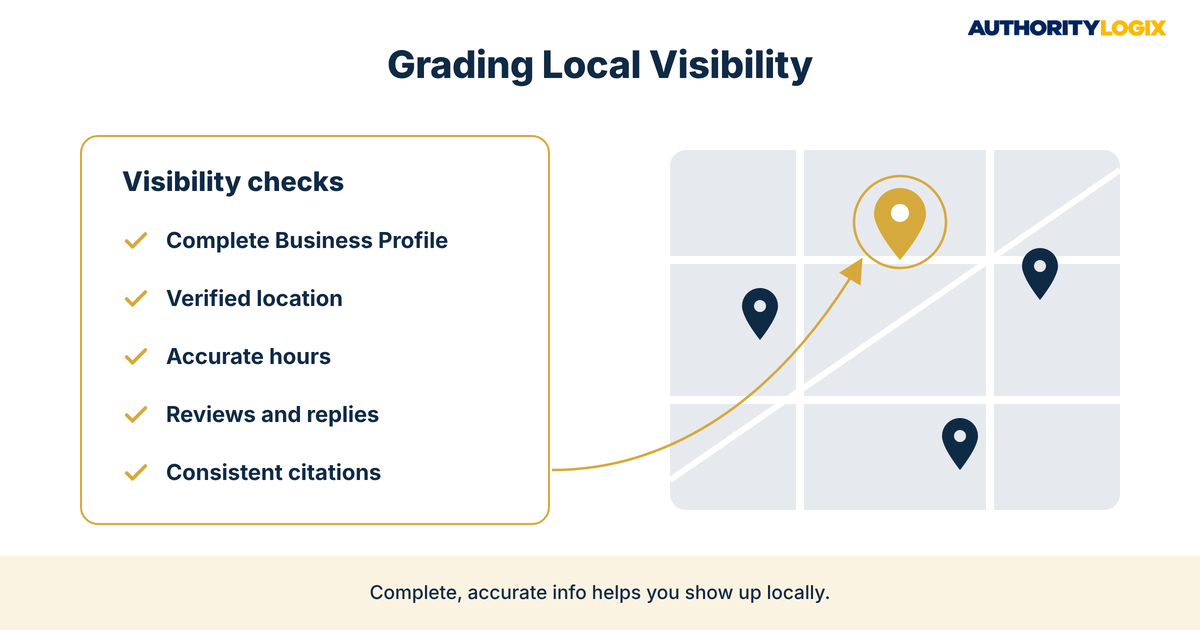
- Google’s Business Profile Help page says businesses with complete and accurate info are more likely to show up in local search results, which puts the profile first in any visibility grade.
- Trust is graded on what a prospective patient can check before calling: recent reviews, clinician credentials and clear condition pages.
- Patient acquisition is graded on the full path from search to scheduled visit, including how fast calls and forms get answered and whether every source is tracked.
- A PT marketing scorecard turns a one-time physical therapy marketing audit into a quarterly habit with the same categories, the same scale and the same owner.
- Audit grades matter only when they become a short priority plan that fixes the weakest system first.
Table of Contents
A physical therapy marketing audit is the fastest way to find out why a practice with skilled clinicians and loyal patients still struggles to fill its evaluation schedule. Most owners can describe their clinical care in detail, but few know how the practice looks to a stranger searching for help. That gap sits underneath every part of patient acquisition, from the first search to the first visit.
Many practices are credible but invisible: the expertise is real, but the signals the market uses to judge it are thin, scattered or out of date. A structured physical therapy marketing audit replaces guesswork with grades. It treats visibility, trust and acquisition as separate systems, gives each one a grade, and shows you where the next dollar and the next hour should go.
What a Physical Therapy Marketing Audit Should Measure
A useful physical therapy marketing audit measures systems, not activity. Counting posts, ads or flyers tells you how busy the marketing has been, not whether it brings in patients. The better question for each system is simple: can a prospective patient find you, believe you and book with you without friction?
That question produces three grades. Visibility covers whether you appear in local searches, trust covers what patients see once they find you, and acquisition covers the path to a scheduled evaluation. A practice can grade strong on one and weak on another, so each physical therapy marketing audit category needs its own score.
Grades also need context. A practice that ranks well in a quiet suburb may still lose patients to a larger group in a denser market, so pair your physical therapy marketing audit with a simple competitive analysis of the practices that appear most often for your core services. The goal is to see the standard patients compare you against.
PT Authority Self Assessment Before You Bring In Outside Help
Start with a PT authority self assessment before you hire anyone. Search your main services plus your town on a phone, the way a new patient would, and write down what you see: whether your practice appears, what your reviews say, and how quickly the site explains how to book. That first pass costs nothing and gives you a baseline no vendor can spin.
The self assessment also shows where your own team is blind. Owners and staff rarely experience the practice the way a stranger does, so ask someone outside the clinic to find and book you while you note every point where they hesitate. Those notes become the raw material for every PT marketing decision that follows.
If you bring in outside help later, the self assessment keeps the conversation honest, because you can judge any proposal by whether it explains how each grade will change. That standard is also the core of why AuthorityLogix treats practice growth as a system build rather than a list of tactics.
The Physical Therapy Practice Authority Growth Blueprint shows how visibility, trust and acquisition fit together, so the grades from your physical therapy marketing audit point to one connected growth plan.
How to Grade Local Visibility: PT Visibility Trust Grade Part One
Local visibility is the first half of what we call the PT visibility trust grade, because a patient cannot trust a practice they never see. Google’s Business Profile Help page says local results are mainly based on relevance, distance and popularity, and it describes prominence as how well-known a business is, based on info like how many websites link to your business and how many reviews you have. Distance is fixed, but relevance and prominence can both be graded.
Grade relevance by checking whether your profile categories, services and pages use the words patients actually search, such as back pain or sports injury. Grade prominence by comparing your review count with nearby competitors and noting which local sites, partners and directories link to you. The same Google page says more reviews and positive ratings can help a business’s local ranking, so a review gap is a visibility problem, not only a reputation one.
Map Pack, Business Profile, and Citation Checks
Treat this part of the physical therapy marketing audit like a local SEO audit checklist. Search your core services from several spots around your practice and note whether you appear in the map pack, then open your physical therapy Google Business Profile and confirm the address, hours, categories, services and photos are complete and current. Google’s help page says businesses with complete and accurate info are more likely to show up in local search results.
Next, check citations, the directories that repeat your name, address and phone number. Inconsistent listings confuse patients and weaken the signals behind local visibility, so record every mismatch you find. A practice with a complete profile, steady reviews and clean citations earns a strong visibility grade, while one missing any of those earns a weak or developing grade.
Multi-location practices should run the physical therapy marketing audit for each location separately, because each has its own profile, reviews and map pack competitors. Averaging the scores hides the weakest site, and the weakest site is often where the fastest gains in local search are waiting.
How to Grade Trust Signals Across Reviews, Content, and Credentials
Trust is the second half of the PT visibility trust grade, and it is graded from the patient’s side of the screen. Someone who finds you in the map pack will read your reviews, scan your clinicians’ backgrounds and open a condition page before deciding to call. Each moment either confirms the recommendation or quietly undermines it.
Grade reviews on recency, volume compared with competitors, and whether the practice replies. Grade credentials on whether each clinician’s page names their degree, specialties and certifications in plain language. Grade content on whether your site answers the questions patients bring to a first visit, such as what an evaluation involves and whether they need a referral, because that depth is what builds clinical authority before anyone walks in.
A physical therapy marketing audit should also flag thin or outdated pages. A condition page with two generic paragraphs, a blog that stopped years ago, or a services page that lists treatments without explaining who they help all lower the trust grade. A dedicated content audit goes page by page, but the marketing audit only needs to record which pages exist, which are thin and which are missing.
Keep the guardrails in view while you grade. Trust content should explain options honestly, never promise recovery or reveal personal patient details. Pages that stay inside those lines read as more credible, not less.
How to Grade Patient Acquisition Systems From Search to Scheduled Visit
Patient acquisition is graded on the path, not the pieces. A practice can rank well and look trustworthy and still lose patients between the click and the calendar. This part of the physical therapy marketing audit walks the full journey: search result, profile, website, call or form, response and booked evaluation.
Test each step yourself. Call during lunch and after hours, submit the website form and time the reply, and check whether the booking page answers direct access and insurance questions plainly. Every delay or unanswered question is a point where a ready patient moves to the next result, which is why lead generation is graded as a system rather than a single form.
Then grade tracking. Ask whether your front desk records how every new patient found you and whether anyone reviews those numbers each month. Without tracking, a physical therapy marketing audit can only guess which channels work.
Finally, grade reach beyond search. Practices that share useful guides through email, partner newsletters and professional networks give patients more ways to arrive already informed. That outward layer is authority distribution, and a practice with none of it earns a developing acquisition grade even when its website converts well.

Not sure how your visibility, trust and acquisition systems would grade today? The assessment applies the same physical therapy marketing audit lens to your practice and shows which gap to close first.
Building a PT Marketing Scorecard You Can Repeat Every Quarter
A one-time physical therapy marketing audit is a snapshot, while a PT marketing scorecard is a habit. The scorecard keeps the same categories, the same scale and the same owner every quarter, so a change in grade reflects a real change in the practice rather than a different person checking different things.
Keep it to one page: the three systems, the checks under each, the current grade and one note on what changed. Assign one person to run it on a fixed day each quarter, and save each version of the physical therapy marketing audit so you can compare them side by side.
Scoring Each Physical Therapy Marketing Audit Category on a Simple Scale
Use a three-level scale of weak, developing and strong, and write down what each level means before you score anything. Vague grades invite debate, while written definitions end it. The table below shows how each category of a physical therapy marketing audit can be defined.
| Audit category | What you check | Weak grade | Strong grade |
|---|---|---|---|
| Visibility | Map pack presence, Business Profile completeness, citations | Missing from map results for core services | Appears for core services with a complete, current profile |
| Trust | Review recency and replies, clinician credentials, condition pages | Few recent reviews and thin or missing pages | Steady recent reviews and detailed clinician and condition pages |
| Acquisition | Call and form response, booking path, source tracking, reach | Slow replies and no record of where patients came from | Fast replies, a clear booking path and a monthly source review |
Developing sits between the two and often means the pieces exist but nobody maintains them. That pattern points to upkeep rather than missing tools, which is where repeatable content systems matter: they keep pages, profiles and guides current without depending on the owner’s spare time.
The same scheduled discipline sits behind our process. AuthorityLogix built BKDSCR.com, its own proof-of-concept platform in the NYC real estate investment niche, with 18 pillar pages, 7 interactive investor tools and 48 posts, using zero paid ads. It is a real estate build, not a practice, but the lesson carries over: systems graded on a schedule get maintained.

Turning Physical Therapy Marketing Audit Results Into a Priority Plan
Physical therapy marketing audit grades are useful only if they change what you do next. Start with the weakest system, not the easiest fix, because a strong website cannot make up for a practice that never appears in local results.
Turn each weak grade into a few concrete actions, each with an owner and a date. Complete the Business Profile and fix citations, ask recent patients for reviews through a consistent process, rewrite the thinnest condition page, and set a response standard for calls and forms. A focused 90-day plan built from those actions is far easier to finish than a long wish list.
- Fix anything that stops patients from finding you.
- Fix anything that stops them from booking once they do.
- Strengthen the trust signals they check before calling.
- Build content that keeps working long after it is published.
Content comes last in that order but matters most over time, because pages built around real patient questions keep earning visibility. That is the territory of content SEO, and it is exactly the work your next physical therapy marketing audit is designed to measure.
FAQ: Marketing Audit Questions From Practice Owners
How often should a practice run a physical therapy marketing audit?
Run a full physical therapy marketing audit once a year and update the PT marketing scorecard every quarter. Re-audit sooner after a major change, such as a new location, a website rebuild or a drop in new evaluations.
Which physical therapy marketing metrics matter most in an audit?
A physical therapy marketing audit should focus on the numbers tied to patients: map pack presence for core services, review volume and recency, response time to calls and forms, and new evaluations by source. Website visits are context, not a grade.
What are the most common physical therapy marketing fails an audit uncovers?
Incomplete Business Profiles, stale reviews, thin condition pages and untracked phone calls are frequent problems. Each one is fixable, and none requires a large budget, only a clear owner and a schedule.
Should patient education pages count toward the audit?
Yes, because they carry much of the trust grade. A practice with an organized educational hub gives patients answers before the first call, and a physical therapy marketing audit should note which common questions it covers and which are missing.
Where can I see what a strong grade looks like in practice?
Study the practices that consistently appear for your services and note what their profiles and pages include. Our collection of PT resources also walks through each system in more depth, from local search to content.
Ready to have AuthorityLogix build the visibility, trust and patient acquisition systems your physical therapy marketing audit shows are missing?
Using Audit Grades to Guide the Next Year of Growth
A physical therapy marketing audit is not a verdict on your practice. It is a map of where your credibility is reaching patients and where it is getting lost, and for many practices it shows that the clinical care was never the problem.
The year ahead follows from your physical therapy marketing audit grades. Fix the weakest system first, keep the PT marketing scorecard on a quarterly schedule, and judge every new idea by which grade it will move. When you want to see how those pieces fit together, our services are built around the same visibility, trust and acquisition systems the audit grades.
The honest answer is that most practices already have the expertise patients are looking for. The missing piece is the infrastructure that lets the market see it, and a physical therapy marketing audit is how you find out exactly where that infrastructure is thin.