


Key Takeaways
- Financial services FAQ content SEO turns the questions borrowers and clients already ask you every week into indexed answers that rank.
- Backlinko found 14.1% of Google searches are phrased as questions, and Fannie Mae research shows most consumers misjudge basic mortgage requirements.
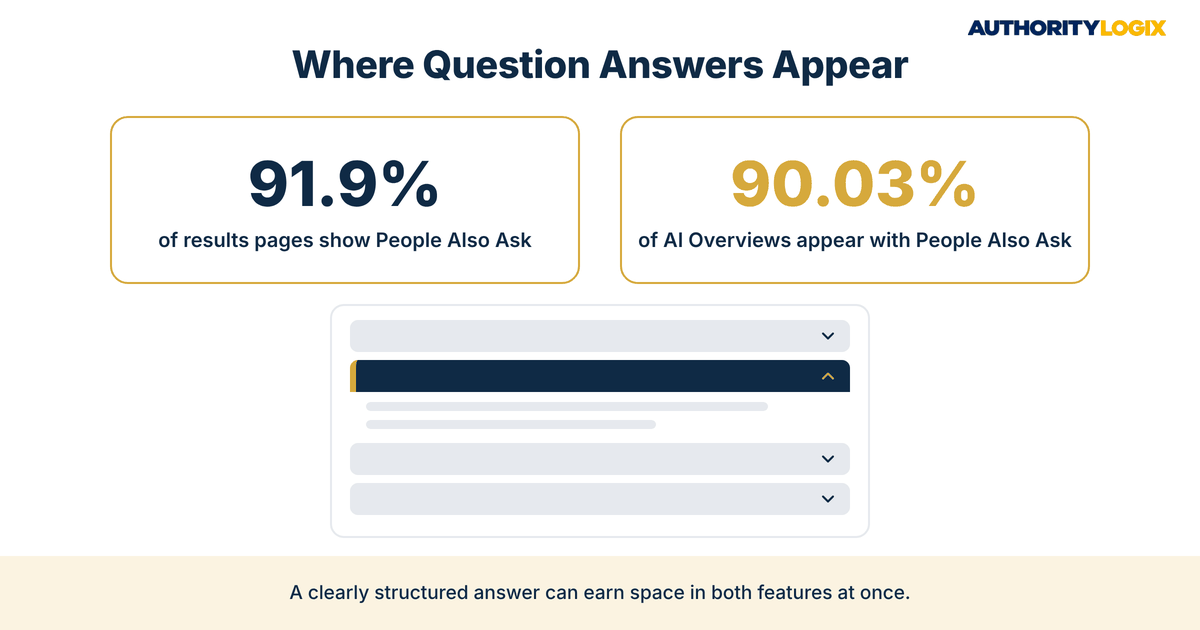
- People Also Ask appeared on 91.9% of results pages in cloro’s 2026 SERP census, so one clear answer can earn several placements.
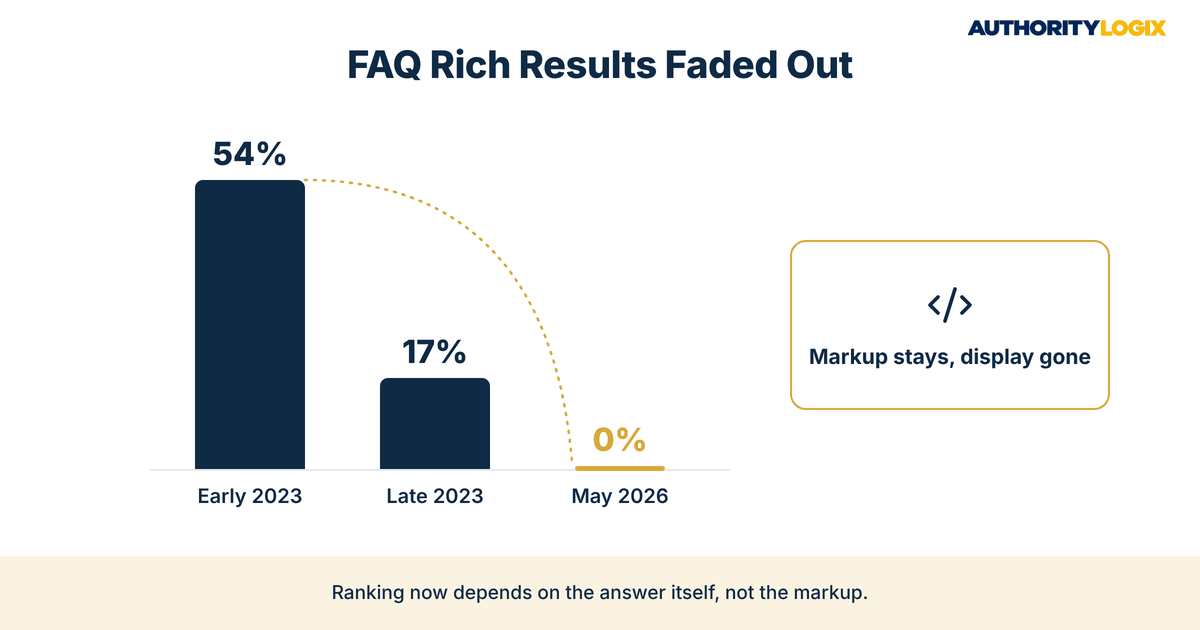
- FAQ rich results stopped appearing in Google Search in May 2026, which means ranking now depends on the answer itself, not the markup.
- A strong financial services FAQ content SEO program groups questions by borrower stage, answers them in depth, and routes each reader to a relevant next step.
- Advisors and lenders can stay compliance-aware by explaining concepts and processes rather than promising outcomes or recommending products.
Table of Contents
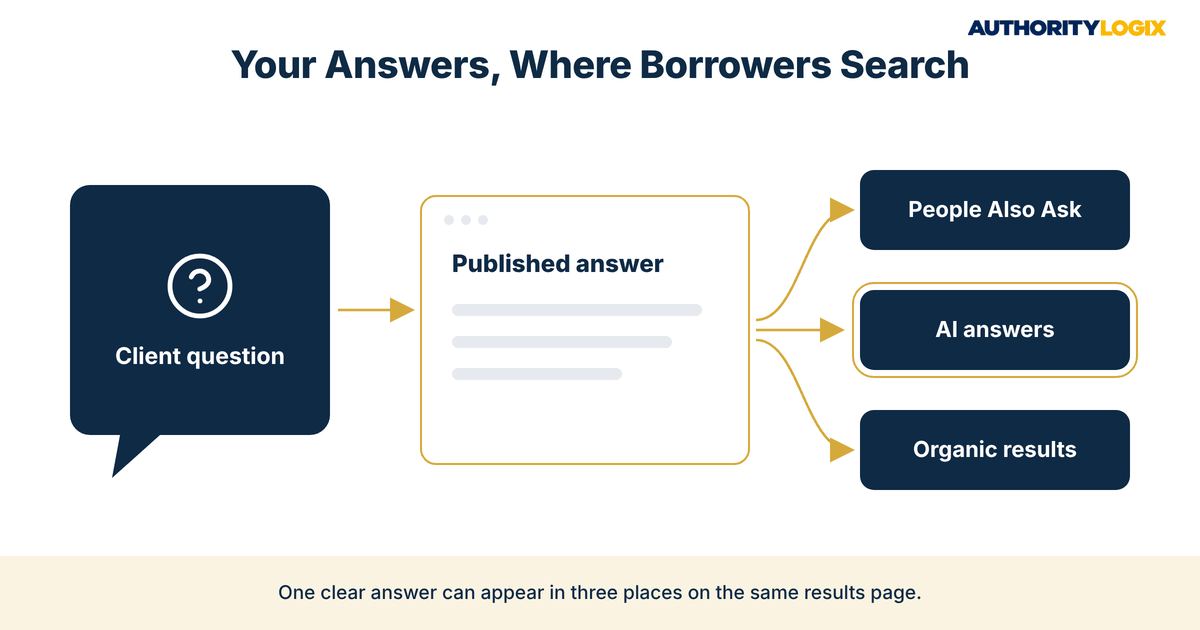
Financial services FAQ content SEO starts with something every lender and advisor already knows from the phone: clients ask the same questions over and over. What is the minimum down payment, how does a DSCR loan qualify, what does fee-only mean, how are advisory fees charged. You answer those questions in every first meeting, patiently and accurately, yet when the same person types the question into Google, another firm’s page does the answering.
That gap is not a writing problem. It is an infrastructure problem, because the answers live in your head and your inbox instead of on indexed pages built to rank. Question searches now feed three surfaces at once — classic results, People Also Ask boxes, and AI search answers — and each one rewards the firm that publishes a clear, specific answer first. This article lays out how to build financial services FAQ content SEO as a system rather than a single page tucked into the footer.
Why Financial Services FAQ Content SEO Captures Question Searches
Backlinko’s analysis of 306 million US keywords found that 14.1% of Google searches are phrased as questions using who, what, where, why, or how, with “how” alone accounting for 8.07%. The study dates to 2020. For a mortgage company or advisory firm, those question searches are the earliest signal of intent: the borrower is not ready to apply, but they are already forming an opinion about who knows the subject. Those searches are the raw demand financial services FAQ content SEO is built to meet.
Fannie Mae’s Mortgage Understanding Study shows how wide the knowledge gap runs. Only 24% of consumers knew that loans backed by Fannie Mae and Freddie Mac allow as little as 3% down, and close to one-third believed they needed a credit score of at least 700. Websites were the most cited source of mortgage information at 50%, ahead of loan professionals at 48%. Every one of those misconceptions is a question someone is typing, and every accurate answer is a financial services FAQ content SEO opportunity.
Question pages also compete differently from service pages. A page titled “Mortgage Services” fights every lender in the country for a vague phrase, while a page answering “Can rental income qualify me for a DSCR loan” competes against a handful of thin replies. That is the logic of the SEO playbook: stop chasing broad head terms and own the questions underneath them, which is exactly where financial services FAQ content SEO does its work.
The firms that win these searches are rarely the biggest. They are the ones whose answers are specific to a market, a loan product, or a client type — detail a 20-year originator or seasoned advisor can supply without research. Strong financial services FAQ content SEO puts that expertise into a structure the market can see. For firms deciding which audiences and products to cover first, the services hub shows how each part of the visibility system fits together.
Financial services FAQ content SEO works best inside a publishing system where every answer has a job. The Financial Services Content System lays out that blueprint.
Mortgage FAQ Page Ranking and People Also Ask
Mortgage FAQ page ranking is no longer only about the ten blue links. In cloro’s 2026 SERP feature census, which scored 69,817 Google results pages across 41 markets, People Also Ask appeared on 91.9% of results. Semrush’s AI Overviews study found People Also Ask showing alongside AI Overviews 90.03% of the time. A single well-built answer can therefore surface in the expandable question box, in the AI summary above it, and in the organic listings below. For financial services FAQ content SEO, that overlap multiplies the return on each answer.
How Financial Services FAQ Content SEO Wins People Also Ask Placements
Google tends to pull People Also Ask answers from pages that state the question plainly and resolve it in the first two or three sentences. Long preambles and “call us to find out” replies get passed over. The answers that win are usually built downward from pillar pages, with a comprehensive guide on a topic like DSCR qualification and each common question broken out under its own heading or supporting page. That top-down pattern is the backbone of financial services FAQ content SEO.
Structure matters as much as wording. A mortgage FAQ page that lists 40 questions on one URL with two-line answers gives Google little to rank, because no single answer has depth. A stronger pattern groups questions by borrower stage — qualifying, comparing, applying, closing — and gives the most-searched questions 150 to 300 words of real explanation. When those groups live inside an educational hub, each answer inherits authority from the pages around it and passes authority back.
| FAQ Format | Typical Search Result | Financial Services FAQ Content SEO Value |
|---|---|---|
| One long page with 40 short answers | Rarely ranks for any single question | Weak — no answer has depth |
| Questions grouped by borrower stage | Ranks for clusters of related questions | Strong foundation |
| Dedicated page per high-demand question | Competes for People Also Ask and AI answer placement | Strongest for priority questions |
| Questions answered inside pillar guides | Supports topical authority on the subject | Strong when headings match the question |
| Answers gated behind a contact form | Not indexed at all | Invisible to search |
The pattern in that table holds for financial services FAQ content SEO across lending and advisory sites: depth and structure beat volume. A firm that publishes 12 thorough answers to the questions its borrowers actually ask will usually outrank a firm that posts 60 thin ones. Volume without infrastructure is just noise.
Advisor FAQ Content Strategy for AI Answers
An advisor FAQ content strategy now has to account for how AI tools assemble answers. Semrush tracked AI Overviews on 6.49% of queries in January 2025, rising to a peak of 24.61% in July before settling at 15.69% in November. Informational queries made up 91.3% of the searches that triggered them early in the year. Questions such as “what is a fee-only advisor” are exactly the informational searches these summaries are designed to answer. That makes AI visibility a core part of financial services FAQ content SEO for advisory firms.
AI systems pull from pages they can parse cleanly. A question as the heading, a direct two-sentence answer, and then supporting detail is the shape that gets quoted. That shape depends on site structure as well: clear URLs, a logical path from category to question, and internal links that tell crawlers which page holds the definitive answer on each topic.
For advisors, compliance shapes the strategy as much as search does. FINRA Rule 2210 governs broker-dealer communications with the public, and SEC-registered advisors work under the Marketing Rule, so compliance-aware financial services FAQ content SEO explains concepts, defines terms, and describes processes without promising outcomes or recommending specific products. Educational answers fit those rules naturally, and they are also the kind of material AI answer engines prefer to cite.
The practical work is a review loop. Draft answers from real client questions, route them through compliance as a batch, publish on a set schedule, and revisit them when rules or products change. Firms that build this loop into their content systems remove the bottleneck where every new answer waits weeks for sign-off, which is why so many advisory FAQ pages stall at eight questions.
Not sure where your firm stands on financial services FAQ content SEO? The assessment shows which borrower and client questions your site is missing.
Lender Frequently Asked Questions SEO With Schema
Lender frequently asked questions SEO once came with a visual bonus: FAQ rich results that expanded a listing with clickable questions. In August 2023 Google limited those results to well-known, authoritative government and health websites. Portent’s analysis of more than 30,000 searches, reported by Search Engine Land, found FAQ rich results falling from about 54% of Google results pages to 17% after that change.
What FAQ Schema Still Does for Financial Services FAQ Content SEO
Search Engine Journal reported that FAQ rich results stopped appearing in Google Search on May 7, 2026, with Search Console support removed in stages through August. The markup causes no harm and can stay on the page. What it no longer does is buy extra space on the results page, so the ranking value of financial services FAQ content SEO now rests on answer quality and structure.
That shift favors firms with real expertise. Once the visual shortcut disappeared, the remaining signals were the ones that always mattered: a clear question, a precise answer, a credentialed author, and a page other pages point to. Named authors, licensing details, and review dates are the trust signals the authority guide covers in depth, and they separate a lender’s answer from an anonymous content farm.
Lenders also hold an advantage most content sites lack: they field these questions daily. An originator who has explained debt-to-income ratios 500 times knows which part confuses people and which example makes it click. Turning that knowledge into finance content written for search, with the question in the heading and the answer in the opening lines, is work most lenders never reach because the pipeline keeps them busy. That backlog is where financial services FAQ content SEO earns its place in a lender’s publishing plan.
Turning FAQ Readers Into Inquiries
Ranking for a question is only half the job of financial services FAQ content SEO. A borrower who reads your DSCR qualification answer and leaves with no next step is a visit, not a lead. Every answer should close with a relevant path forward: a calculator, a checklist, a deeper guide, or a short consultation request tied to that specific question.
The right path depends on the reader’s stage. Someone asking “what is a DSCR ratio” needs a calculator, while someone asking “how long does a DSCR closing take” may be ready to talk. Matching each answer to the right offer is the core of a lead system, and it turns financial services FAQ content SEO from a visibility exercise into a pipeline of client conversations.
BKDSCR.com is the working example. The site pairs 18 pillar pages and 48 SEO-optimized blog posts with 7 interactive investor tools, so a reader who arrives on a question can move straight into a DSCR calculator or deal filter without leaving. It was built with zero paid ads, which is why the question pages carry so much of the inbound load.
Distribution extends the reach of each answer. A strong reply can become a LinkedIn post, or a syndicated article that links back to the original page. That kind of authority distribution earns the outside mentions that help an answer rank, and it puts your expertise in front of people who have not searched yet.
Financial Services FAQ Content SEO Mistakes That Waste Ranking Opportunities
Mistake: Writing questions nobody searches
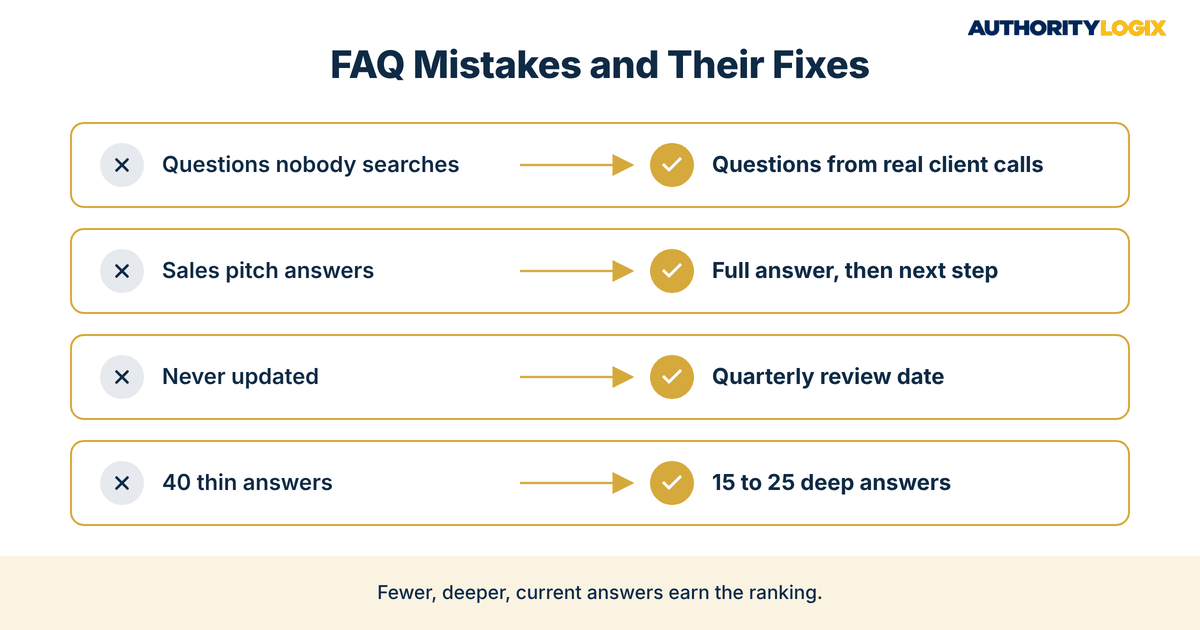
Many FAQ pages are built from what the firm wants to say rather than what borrowers ask. A question like “Why choose us” has no search demand at all. Financial services FAQ content SEO starts from call notes, email threads, and the People Also Ask boxes for your core loan products.
Mistake: Answering with a sales pitch
An answer that sidesteps the question to push a consultation tells Google and the reader that the page has nothing to offer. Answer fully first, then offer the next step. Firms that treat lead generation as the reward for a good answer, rather than a toll in front of it, earn more trust from the same pages.
Mistake: Publishing once and never updating
Loan limits, rate environments, and program rules change every year. A financial services FAQ content SEO program needs a review date on every answer and a quarterly pass to refresh figures. A stale number on a lending page damages trust faster than no page at all.
Question: How many answers does a firm need to start?
Most firms can start with 15 to 25 well-built answers covering their primary products and the questions that come up in every first call. That is enough to map a borrower’s full decision path and to show which topics earn the most visibility. The full scope of what we do in a build starts there and expands as search data shows where demand sits.
Question: Who should write the answers?
The subject matter expert supplies the substance, and an editor supplies the structure. A loan officer or advisor can answer ten questions in a 45-minute recorded conversation, and an editor turns that into compliance-aware, search-ready pages. That interview-first method is how we build FAQ libraries without pulling principals away from clients for weeks.
Want FAQ content that ranks and answers prospects before they call? We’ll build the questions and answers that do both.
Answer the Question, Earn the Visit
Financial services FAQ content SEO rewards something most lenders and advisors already have: years of answering the same questions well. The search surfaces have changed, with FAQ rich results gone and People Also Ask and AI summaries now sitting on most results pages. The core requirement has not changed at all.
None of this works as a one-off project. FAQ answers compound when they connect to pillar guides, tools, and service pages, which is the long-term view the growth playbook takes. Each answer published this year supports the ones published next year.
The reasons why it works come down to structure, not volume or ad spend. A single well-maintained answer can keep earning visits for years, while a paid click ends the moment the budget does. Well-built financial services FAQ content SEO is an asset that keeps working; ads are a rental.
The honest assessment is that most firms in this space already have the answers. They give them every day on the phone, in meetings, and over email. The missing piece is the infrastructure that publishes those answers where borrowers search, and if you want that built around your expertise, you can work with us to map your first 20 questions.