


Key Takeaways
- Physical therapy seasonal marketing plans patient acquisition around the predictable rises and dips in demand, instead of reacting after the schedule has already thinned out.
- PT seasonal patient volume tends to follow deductible resets, school and sports calendars, holidays and weather, and every practice should confirm its own pattern from its scheduling data.
- Physical therapy demand cycles start with cost: according to CMS, the annual deductible for all Medicare Part B beneficiaries will be $283 in 2026.
- Slow months are filled months in advance, because physical therapy seasonal marketing published ahead of a dip is what ranks when the dip arrives.
- PT peak season planning means building clinician capacity, intake scripts and seasonal pages before demand rises.
- A 12-month physical therapy seasonal marketing calendar ties every quarter to one lead channel and one content focus, so the plan runs without the owner rebuilding it each season.
Table of Contents
What Drives PT Seasonal Patient Volume Swings Through the Year
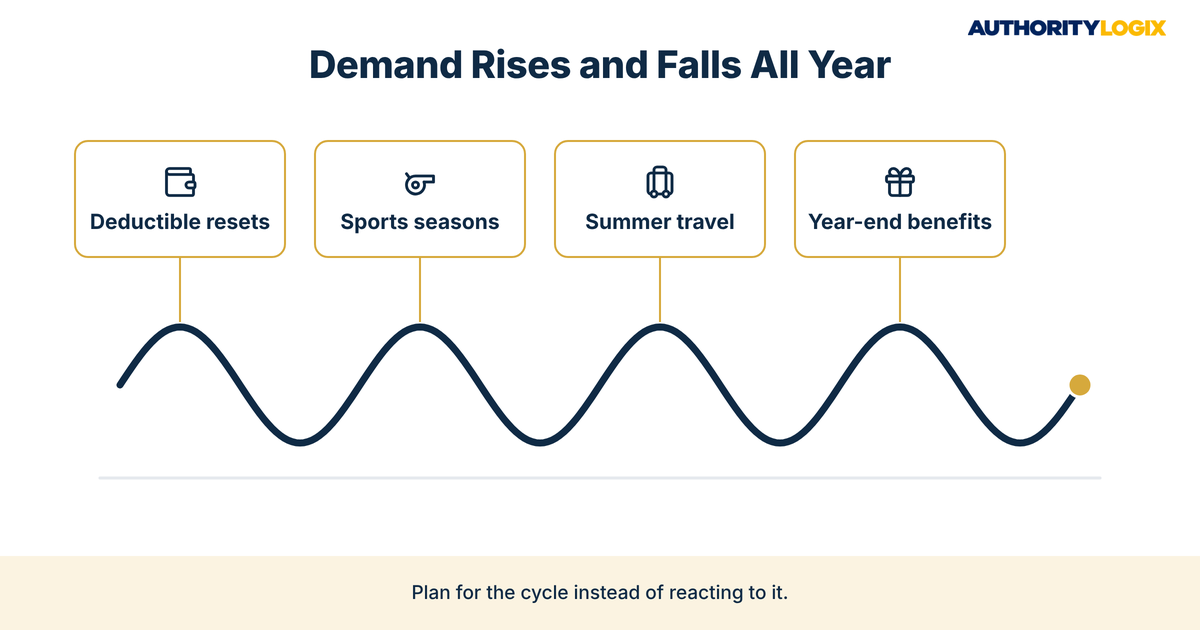
Physical therapy seasonal marketing starts from something most owners already feel in their schedules: demand for care is not flat across twelve months. Evaluations bunch up in some weeks and thin out in others, and the practices that plan for that rhythm keep their clinicians busy while others scramble. For most PT practices, the pattern is visible in the appointment book long before it shows up in any marketing report.
The drivers of PT seasonal patient volume are familiar: deductible resets, school years, sports seasons, holidays, weather and travel. None of these are surprises, which is exactly why physical therapy seasonal marketing can plan for them instead of absorbing them.
The real problem is that many practices are credible but invisible during the months that matter. The reputation and referring relationships exist, but the market does not see the practice when a seasonal need appears. A runner preparing for a spring race searches on their own timeline, and a practice without seasonal pages is absent from that search. Closing that gap is part of long-term authority growth, not a one-month promotion.
Start with your own numbers before you build anything. Pull at least a full year of new evaluations by week, mark the dips and spikes, and note what was happening in your community at each point. That map becomes the foundation of physical therapy seasonal marketing, because it shows which months need new demand created and which months need capacity protected.
Seasonal swings also expose how dependent a practice is on a few referral sources. When physician referrals slow down around the holidays, a practice with its own lead generation system keeps receiving direct inquiries from people who found it on their own. Physical therapy seasonal marketing is how that system gets pointed at the right months, so direct-access patients arrive when referred volume naturally dips.
That is also why seasonal planning belongs inside a larger system rather than a run of one-off campaigns. A connected plan, where each season’s pages build on the last, is central to our approach for clinics that already have the reputation to back it up.
The Physical Therapy Patient Acquisition Playbook lays out the full new-patient pipeline, and physical therapy seasonal marketing is how that pipeline gets timed to your own demand cycles.
How Insurance Deductible Resets Shape Physical Therapy Demand Cycles
Physical therapy demand cycles are shaped as much by insurance timing as by weather. Many health plans run deductibles on an annual cycle, so a patient who has paid toward the deductible late in the plan year faces a different cost picture than one starting fresh, and that influences when they book.
Medicare shows the scale of that decision for older patients. According to the CMS fact sheet, the annual deductible for all Medicare Part B beneficiaries will be $283 in 2026, up from $257 in 2025, and the standard monthly Part B premium will be $202.90. For many patients on Medicare, that out-of-pocket amount is a real factor in deciding when to begin care.
Your practice cannot change how a plan works, and it should never give financial or coverage advice. It can explain in plain language how deductibles generally work, encourage patients to check their own benefits, and make questions easy to ask. That is what physical therapy seasonal marketing looks like when it respects patients.
Year-End Benefit Use Messaging
The last quarter is where deductible timing matters most. Patients who have met their deductible, or who have flexible spending dollars that may not roll over, look for answers about using health benefits before they expire. A short, accurate page on what to ask an insurer, with clear booking options, answers that search without promising savings.
Year-end physical therapy seasonal marketing works best when it is written months ahead and published by early fall, so it has time to be indexed. Producing the seasonal page, the email to past patients and the front-desk script together is the kind of connected build described in our services.
The start of the year needs its own message. The “new year, new deductible” moment is when some patients put off care, so January and February pages should explain what an evaluation involves and how direct access works in your state. Physical therapy seasonal marketing treats both ends of the plan year as distinct conversations.

How Physical Therapy Seasonal Marketing Fills the Slow Months Before They Arrive
The slow months are not filled in the slow months. By the time the schedule thins in late summer or around the holidays, it is too late for a new page to rank or for a new referral relationship to produce. Physical therapy seasonal marketing works backward from each dip, publishing and distributing the right material well before patients start searching.
That timing holds only when publishing is routine. Practices running repeatable content systems plan a quarter’s topics in one session and release them before the window opens. Without that structure, seasonal pages get written the week they are needed, which is the week they are least useful.
The summer slowdown is the clearest example. Vacations and school breaks pull patients away from appointments, and new evaluations can soften at the same time. Physical therapy seasonal marketing answers with summer activity guides published in spring, scheduling reminders for current patients and flexible hours, giving the market a reason to book during a low season.
A Physical Therapy Seasonal Marketing Publishing Calendar
A useful calendar maps each month to three things: the seasonal need patients have, the page that answers it, and the channel that will carry it. If you want a starting framework, our content calendar guide walks through how to set one up so topics come from real patient questions rather than from whatever feels timely that week.
Every seasonal piece should be built to be found. A spring return-to-activity page needs the same keyword research, internal linking and structure as a core service page, the discipline behind strong content SEO. Built this way, seasonal pages return each year and gather authority instead of disappearing after one campaign.
AuthorityLogix proved this model on its own proof-of-concept platform, BKDSCR.com, in NYC DSCR real estate lending: 48 SEO-optimized blog posts and 18 pillar pages, built in under 18 months with zero paid ads. Content published today ranks and generates leads six months from now, and seasonal pages are where that lag matters most.
Not sure whether your practice is visible during its slow months? The assessment shows where physical therapy seasonal marketing would close the gaps in your demand cycle and what to fix first.
PT Peak Season Planning: Building Capacity and Content Ahead of Demand
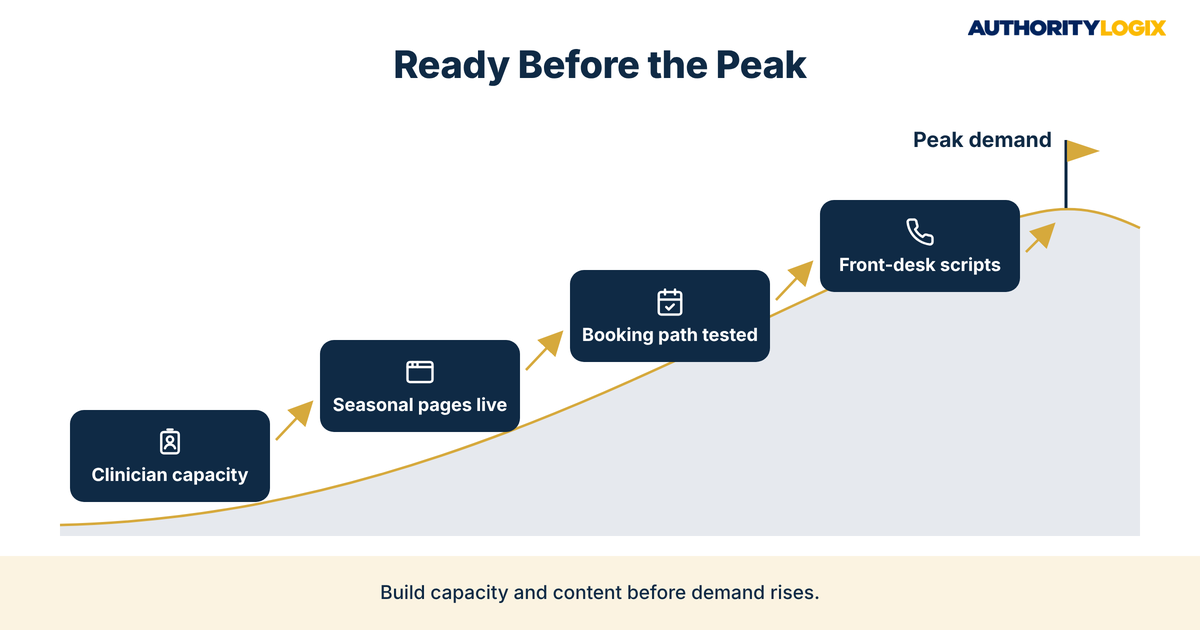
PT peak season planning is the other half of the calendar. When demand rises, the risk is a practice that cannot absorb it: calls going to voicemail, evaluations booked weeks out, and callers who contact someone else. A busy season handled poorly can cost more goodwill than a slow one.
Capacity comes first. Review clinician schedules, part-time coverage and front-desk staffing for the months your data shows are heaviest, and decide in advance how you will handle overflow. Physical therapy seasonal marketing should never promote harder into weeks the practice cannot serve, so the marketing plan and the staffing plan are built from the same calendar.
Content for peak season also needs to be in place before the peak. Intake pages, condition pages that match the season’s most common questions, and clear booking instructions should all be live and tested. Mapping those pieces, assigning who builds each one and setting the launch dates is how our process turns a seasonal idea into a working system.
Spending follows the same logic. Many practices spend the most when they feel busiest, which is backward. A sound plan shifts investment toward the months before a dip and toward evergreen pages that keep working, a topic covered in our guide to budget allocation for physical therapy practices. Physical therapy seasonal marketing makes those decisions visible a year ahead instead of month by month.
Finally, write intake scripts for each season. A front desk that knows what callers ask during spring sports season or the December benefits rush books more of them, which is PT peak season planning at its most practical.
Which Channels Carry Physical Therapy Seasonal Marketing Best by Quarter
Not every channel does the same job in every season. Search carries the moment of need, email reaches past patients who already trust you, and community partners reach people before they start looking. Physical therapy seasonal marketing assigns each quarter a lead channel so effort is focused rather than spread thin.
| Quarter | Common seasonal factors | Lead channel | Content focus |
|---|---|---|---|
| January to March | New deductibles, new activity goals, winter weather | Search and past-patient email | What an evaluation involves, direct access, planning care around benefits |
| April to June | Spring sports, race season, more time outdoors | Local search and community partners | Return-to-activity guides, sports-season pages |
| July to September | Summer travel, school breaks, back-to-school sports | Email and flexible scheduling | Travel-friendly scheduling, back-to-school sports guides |
| October to December | National Physical Therapy Month, year-end benefits, holidays | Search, email and community events | Year-end benefit questions, winter activity, holiday scheduling |
Local Search Timing for Sports and Activity Seasons
People looking for help during a sports or activity season search close to home. Updating Google Business Profile posts, service descriptions and photos before each season gives your practice a better chance of appearing, and it depends on solid local search foundations. Physical therapy seasonal marketing puts those updates on the calendar instead of leaving them to memory.
Seasonal reviews matter too. Asking satisfied patients for reviews during your busiest months builds a steady record that new patients see during the quieter months that follow. That rhythm, along with accurate listings and location pages, is the core of lasting local visibility for a practice competing with nearby clinics.
Once seasonal pages exist, they have to reach people. A spring guide can go to past patients, running clubs, youth leagues and the practice’s social channels in the same week. Coordinating that reach is the job of authority distribution, which turns one seasonal article into visibility across your community.
October deserves a special note. It is National Physical Therapy Month, an observance first commemorated by the American Physical Therapy Association, and it gives practices a natural reason to publish education and host community events. Physical therapy seasonal marketing can use that month as the launch point for year-end benefit pages and winter activity guides.
Physical Therapy Seasonal Marketing FAQ
These physical therapy seasonal marketing questions come from patients and practice owners. The answers are general, and patients should always confirm coverage with their own insurer.
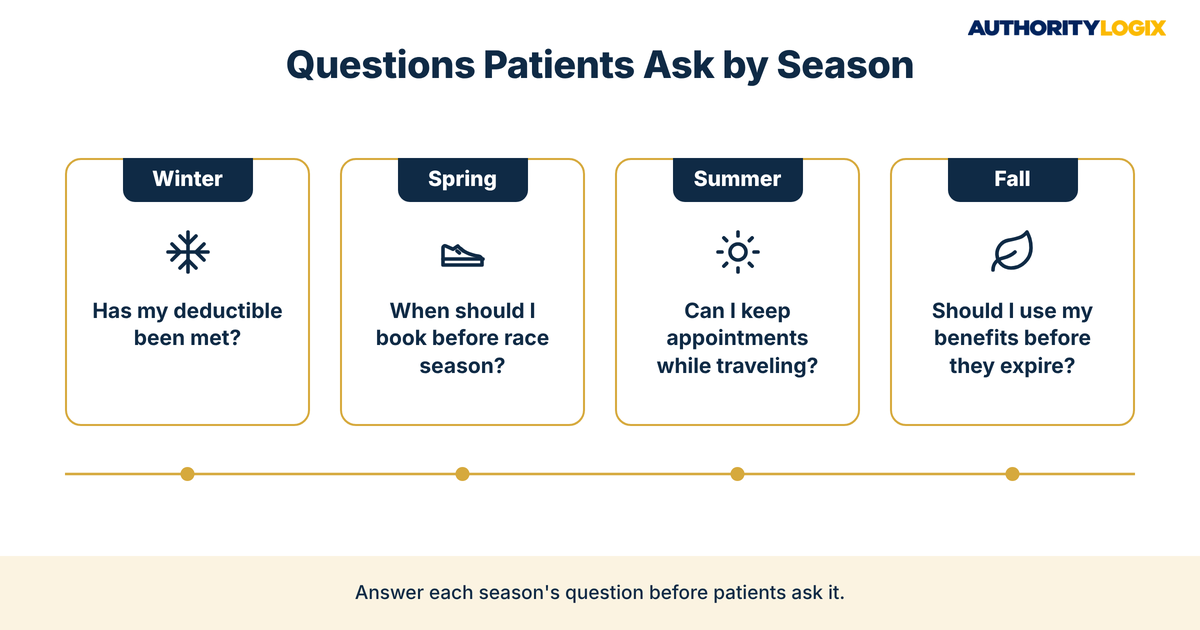
Has my deductible been met, and does it change when I should start physical therapy?
Your insurer or benefits portal can tell you how much of your deductible remains for the current plan year. Whether that affects your timing is a personal decision, and a good practice will explain its billing clearly without pressuring you to book. Practices that publish this kind of guidance in an educational hub make it easier to get straight answers before you call.
Is there a slow season for physical therapy practices?
Many practices notice quieter stretches around summer travel and the winter holidays, but the pattern differs by community and patient mix. The only reliable answer comes from your own scheduling data, reviewed week by week over at least a full year.
How far ahead should a practice plan for the summer slowdown?
Plan the pages and outreach for summer in early spring. That gives seasonal pages time to be indexed, gives partners time to share them, and gives current patients a reminder about scheduling before vacations begin.
Why do practices talk about using health benefits before they expire?
Many plans reset deductibles each plan year, and some flexible spending accounts may not roll over, so year-end is when many patients review what they have left. Clear patient education on how to check benefits, with no promises about coverage or cost, is the responsible way for a practice to address that question.
What seasonal campaign ideas work for a physical therapy practice?
The strongest ideas answer a real seasonal question: return-to-activity guides in spring, back-to-school sports pages in late summer, and benefit and winter activity pages in the fall. Each idea should connect to a page that ranks, a channel that carries it and a clear way to book.
Ready to build a 12-month patient acquisition system that fills your slow months and protects your busy ones before the next demand cycle arrives?
Building a 12-Month Patient Acquisition Calendar Around Your Demand Cycles
A 12-month calendar is where every piece of this comes together. Start with your scheduling data, mark the dips and peaks, and assign each month a patient need, a seasonal page, a channel and a staffing note. Physical therapy seasonal marketing then becomes a plan the whole team can follow, not a set of ideas that live in the owner’s head.
Review the calendar every quarter and rebuild it yearly with fresh numbers. Each year’s seasonal pages stay live, so the next cycle starts from a stronger position. The guides in our PT resources collection cover each system this calendar depends on.
The honest assessment is that seasonal swings are not the problem. Every practice has them. The problem is meeting them without a plan, so slow months arrive as a surprise and busy months overwhelm the front desk. Physical therapy seasonal marketing does not remove the cycle; it means the practice sees each turn coming and has already done the work.
Most practices already have the clinical reputation to fill their schedules all year. What they are missing is the physical therapy seasonal marketing infrastructure that puts that reputation in front of patients at the right time, every year.