


Key Takeaways
- Physical therapy marketing metrics are only useful when they connect marketing activity to booked evaluations, not to impressions, page views or likes.
- The PT marketing KPIs worth watching follow the patient through four stages: being found, reaching out, booking an evaluation and starting a plan of care.
- New patient tracking rests on three parts working together: key events in Google Analytics, call tracking, and a required source field at intake.
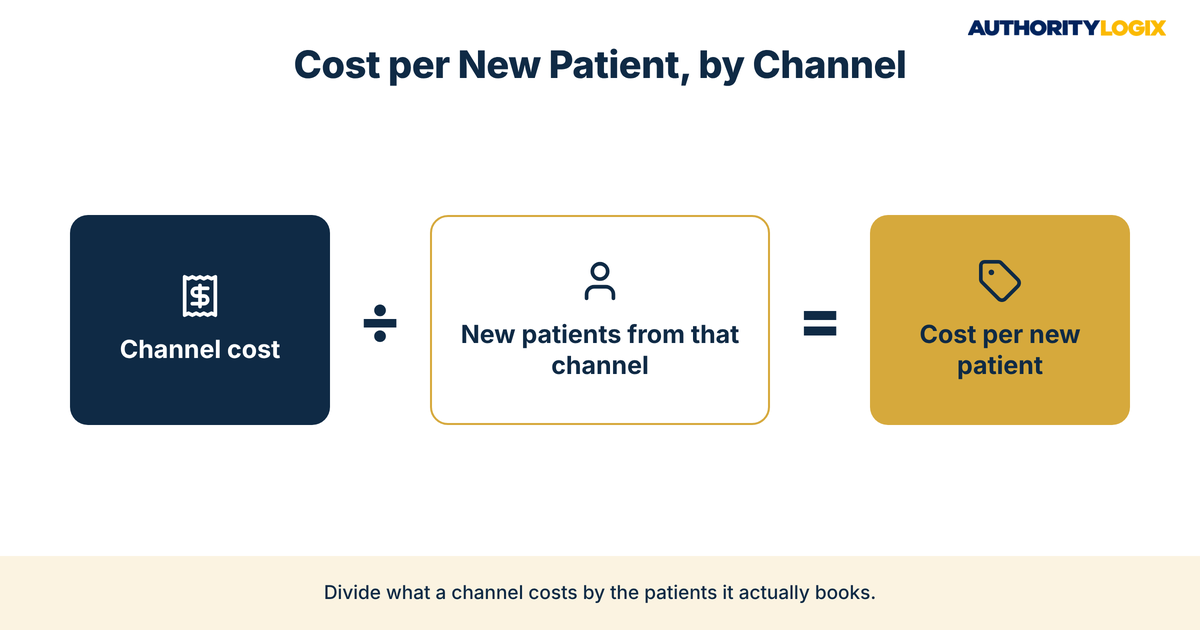
- Cost per new patient is calculated channel by channel: what a channel cost in a period divided by the new patients it produced in that same period.
- Reading physical therapy marketing metrics monthly, with a deeper quarterly review, keeps decisions grounded without burying the owner in dashboards.
- A stable one-page scorecard turns physical therapy marketing metrics into a habit the owner and front desk actually use.
Table of Contents

Why Most Physical Therapy Marketing Metrics Reports Miss the Numbers That Matter
Physical therapy marketing metrics reports usually arrive full of numbers and empty of answers. You get impressions, page views, follower counts and click-through rates, and none of them tells you how many people booked an evaluation last month or where those people came from. For owners of PT practices that already deliver strong care, that gap is expensive: the clinical credibility is there, but the reporting cannot show which part of the marketing is putting patients on the schedule.
Most reports measure activity instead of outcomes, because activity is easy to count and outcomes require connecting a website, a phone line and a front desk. When those pieces stay separate, physical therapy marketing metrics describe effort rather than results, and the owner is left guessing which channel deserves next month’s budget. Every one of our services starts from the same premise: a number earns a place on the report only if it changes a decision.
Vanity numbers also hide the real pipeline risk. A practice that gets most of its new patients from a few referring physicians can look healthy on a traffic report while its direct-access pipeline stays thin. One referring doctor retires and the pipeline dries up overnight. Physical therapy marketing metrics built around the patients your own channels produce are the first warning system for that risk.
The fix is to measure the path a patient actually takes. Someone searches, finds your practice, calls or submits a form, books an evaluation and starts a plan of care, and each of those steps can be counted. Practices that treat lead generation as a connected system, rather than a string of separate campaigns, build that path first and then measure every stage of it.
That shift changes what a marketing report is for. Instead of proving that something happened, physical therapy marketing metrics should show where new patients came from, what each one cost and where the others slipped away. This is our approach to every visibility build: decide which numbers matter before any content is published, then report on those numbers and leave the rest in the platform dashboards.
The Physical Therapy Patient Acquisition Playbook lays out the full new-patient pipeline that these physical therapy marketing metrics are built to measure, from the first search to the first visit.
The PT Marketing KPIs That Connect Activity to Booked Evaluations
Good PT marketing KPIs follow the patient, not the platform. Each one sits at a stage of the pipeline and answers one plain question: did people find you, did they reach out, did they book, and did they start care. If a number cannot be tied to one of those questions, it belongs in a platform dashboard, not on the physical therapy marketing metrics report the owner reads.
| Physical therapy marketing metrics | What it tells you | Where it comes from |
|---|---|---|
| Search visibility | Whether prospective patients can find the practice for the services and conditions you treat | Google Business Profile and search reports |
| Inquiries by source | How many calls, forms and booking requests each channel produced | Call tracking, website key events, booking system |
| Inquiry-to-evaluation rate | How many inquiries became booked evaluations | Front desk and scheduling records |
| Booked evaluations by source | Which channels actually put new patients on the schedule | Required intake source field |
| Started plans of care | Whether booked evaluations became patients who began care | Practice management system |
| Cost per new patient | What each channel spent for every new patient it produced | Channel cost divided by new patients |
The middle of that table is where practices often lose patients without noticing. A strong month of inquiries means little if callers reach voicemail, web forms wait a day for a reply or a first-time caller gets no clear next step. Those conversion gaps sit between marketing and scheduling, which is why neither side tends to own them, and tracking the inquiry-to-evaluation rate puts a number on that handoff.
Search visibility sits at the top of the list for a reason. Many direct-access patients begin with a search for a condition or for a physical therapist nearby, and the practices that appear in local search results get the first chance to earn that call. Watching visibility alongside inquiries shows whether a drop in new patients started with being found or with being chosen.

Setting Up New Patient Tracking From First Click to First Visit
New patient tracking is the plumbing behind every useful report. Without it, physical therapy marketing metrics are estimates built on memory, and the front desk’s best guess about where a patient heard of you becomes the data. With it, every new patient carries a recorded source from the first click or call through to the first visit.
Reliable physical therapy marketing metrics need three parts working together: website events, phone calls and the intake record. Each one captures a different doorway into the practice, and a gap in any of them leaves a share of new patients unexplained. Mapping those doorways before choosing any tools is part of our process, because the tools should fit the patient path rather than the other way around.
Defining Key Events in Google Analytics
Google Analytics already records many actions on your website, but it does not know which ones matter to a PT practice until you tell it. In the Google Analytics Help definition, key events are events that measure an action that’s particularly important to the success of your business, and any event you collect can become a key event. For a practice, the obvious candidates are a submitted appointment request, a tap on the phone number and a completed online booking.
Mark those actions as key events and leave everything else as an ordinary event. Key events also show which pages produce booking actions, which tells you whether the condition pages and guides your content systems publish are bringing in patients or only readers.
Call Tracking and Intake Source Fields
Many people still call a practice rather than fill in a form, so website data alone undercounts the pipeline. Call tracking assigns a distinct number to each channel so each call is credited to the source that produced it. Keep clinical details out of these marketing tools, because the call record needs a source and an outcome, not a health history.
The intake source field closes the loop. Make the question of how a patient heard about you a required field in the scheduling or intake system, with a short fixed list of answers that match your channels and an option for a named referring provider. When every new patient has a recorded source, new patient tracking finally connects marketing activity to the schedule, and physical therapy marketing metrics stop depending on guesswork.
How to Calculate Cost per New Patient by Channel
Cost per new patient is the number that turns physical therapy marketing metrics into a budget decision. The calculation is simple: take what a channel cost in a period and divide it by the new patients that channel produced in the same period. The result tells you what each new evaluation from that source actually cost the practice, which is the comparison every channel decision needs.
The hard part is the bottom of the equation. If new patient tracking is incomplete, the count of patients for each channel is wrong, and cost per new patient will flatter some channels while punishing others. That is why tracking comes first, and why a reliable acquisition cost figure depends on the intake source field being filled in for every new patient, every time.
Calculate the number for each channel separately rather than as one blended average. A blended figure hides the channel that costs far more than the rest, along with the one quietly producing patients for much less. Among all physical therapy marketing metrics, cost per new patient by channel is the one most likely to change where next quarter’s money goes.
Organic channels need a different reading. Content and local search work keep producing inquiries long after the work is paid for, so their cost per new patient tends to fall over time, while a paid channel’s cost stays tied to ongoing spend. Weighing that difference is the heart of sound budget allocation, and it is why one month of physical therapy marketing metrics should never be the only reason to cut a channel.
Not sure which of your channels are producing new patients and which are only producing reports? The assessment shows where your physical therapy marketing metrics and tracking have gaps, and what to fix first.
Reading Physical Therapy Marketing Metrics Monthly Without Drowning in Data
Once tracking is in place, the risk flips from too little data to too much. Every platform offers its own dashboard, and an owner who tries to read all of them will read none of them well. A monthly review of physical therapy marketing metrics should fit in one short meeting and answer three questions: how many new patients did we get, where did they come from, and what did each channel cost.
Watch the top of the pipeline as closely as the bottom. If inquiries drop while booking rates hold steady, the cause usually sits upstream in local visibility: a profile that has gone stale, fewer recent reviews, or a competitor that has started appearing above you. Catching that early in the physical therapy marketing metrics is the difference between a quick correction and months of missed evaluations.
Physical Therapy Marketing Metrics Worth Reviewing Quarterly
Some numbers move too slowly to judge monthly. Organic search rankings, the number of condition pages that produce booking actions, and the share of new patients who arrive without a physician referral all show their direction over a quarter rather than a month. These physical therapy marketing metrics tell you whether the practice is building lasting visibility or renting it.
Quarterly is also the right rhythm for judging content. A practice following a content SEO plan should check which pages earn key events and which only earn visits, then decide what to update, expand or retire. Pages that attract readers but never produce an inquiry usually need a clearer next step, not more visitors.
The same review should cover where your expertise is showing up beyond your own website. Articles, guides and profiles shared through distribution can send patients who later search for your practice by name, so watch branded searches and direct visits alongside the intake source field. Physical therapy marketing metrics that ignore those signals undercount the channels that build recognition before the first call.

Physical Therapy Marketing Metrics FAQ
These are the questions practice owners ask most when they start measuring marketing by new patients. The answers stay on the marketing side.
What role do key performance indicators play in a practice?
They give the owner a short, fixed set of physical therapy marketing metrics that show whether marketing is producing new patients. Without them, decisions about budget and staff time rest on impressions and anecdotes. The most useful PT marketing KPIs are few enough to review in one sitting and tied directly to booked evaluations.
Is there a tracker for new patient call sources?
Yes. Call tracking platforms assign a separate phone number to each channel and log which number each caller dialed. Pair that with the intake source field, because some callers find you one way and dial a number they saw somewhere else, and together the two give new patient tracking a far more complete picture.
Which website pages belong in new patient tracking?
Any page where a prospective patient can request an appointment, call or book should carry a key event. That usually includes the home page, location pages and the condition guides in your educational hub, since many patients decide to book while reading about their own problem. If a page can produce an evaluation, it belongs in the count.
Do patient guides show up in physical therapy marketing metrics?
They do when they are set up to. Guides built on solid patient education answer prospective patients’ questions before they call, and a clear booking prompt on each one turns that reading into a measurable key event. Without that prompt, a guide can earn many readers and still never appear in the numbers that count.
Ready to build the key events, call tracking and one-page scorecard that show exactly which channels put new patients on your schedule?
Building a One-Page Scorecard Your Practice Will Actually Use
The honest assessment is that most practices do not need more physical therapy marketing metrics. They need fewer, recorded reliably and read on a schedule. A one-page scorecard does that job: new patients by source, booked evaluations, the inquiry-to-evaluation rate, cost per new patient by channel and one or two visibility measures, all on a single page the owner and front desk lead review together each month.
Keep the scorecard stable so your physical therapy marketing metrics mean something over time. Change a definition every month and the comparison breaks, so agree on what counts as an inquiry, a new patient and a channel before the first report. That discipline is what lets the scorecard feed an authority growth plan instead of sitting unread in a shared folder.
AuthorityLogix holds its own proof-of-concept build to the same standard. BKDSCR.com, built in the NYC DSCR real estate niche with 48 SEO-optimized blog posts, 7 interactive investor tools and zero paid ads, is judged by the inbound leads it generates rather than by page views. The numbers worth reporting are the ones that connect published work to real conversations.
The honest answer is that most practices already have the clinical credibility patients look for. What they lack is a measurement system that shows which parts of their visibility are working. More guides on building that system are collected in our PT resources, and each one returns to the same principle: measure what reaches your schedule.