


Key Takeaways
- A physical therapy Apple Maps listing and a Bing Places profile reach patients who never open Google Maps, yet many practices leave both unclaimed.
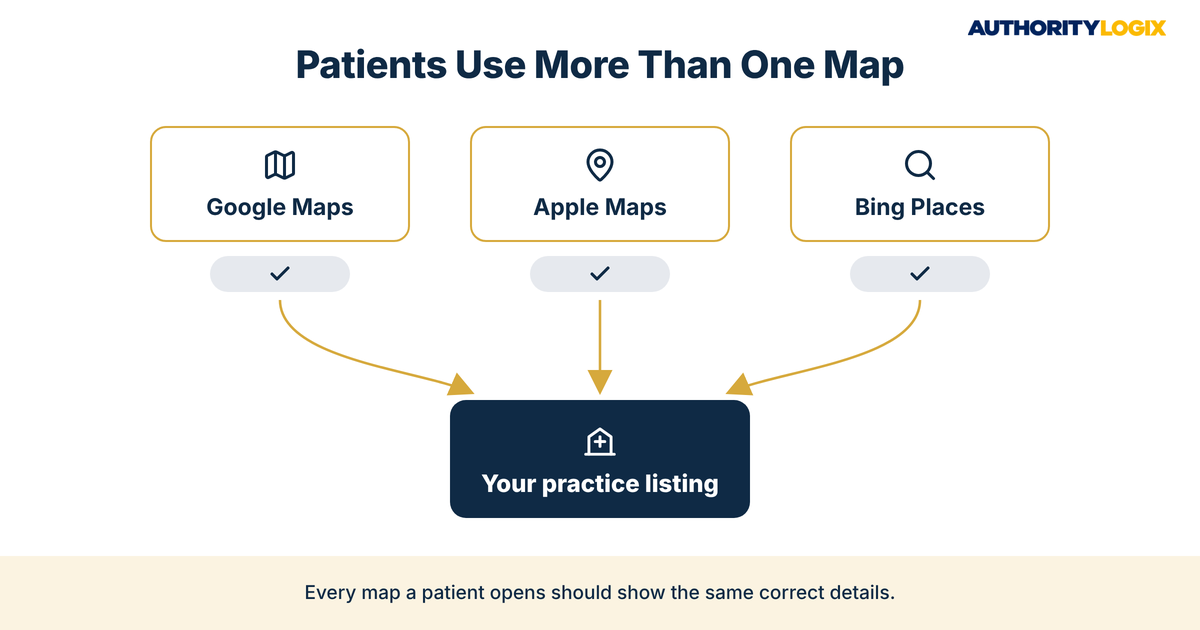
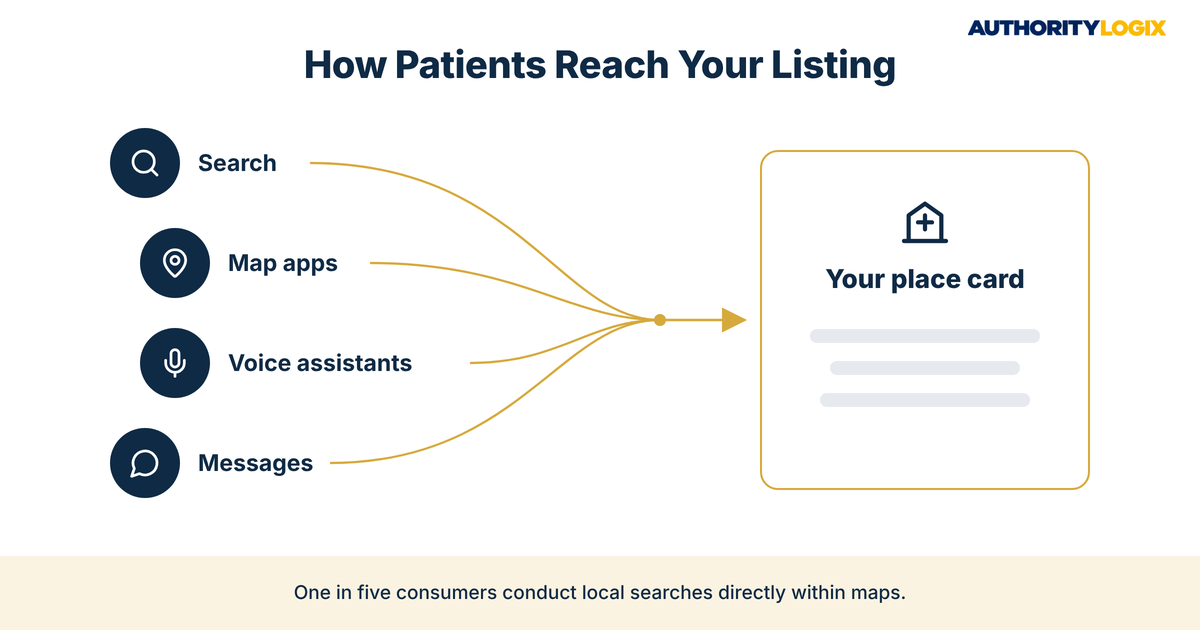
- According to BrightLocal’s 2025 Consumer Search Behavior research, one in five consumers conduct local searches directly within maps, including Google, Apple and Bing.
- PT Apple Business Connect is a free Apple tool that lets a practice control its physical therapy Apple Maps place card, which also appears in Siri, Messages and Wallet.
- Physical therapy Bing Places setup can start from an import of a verified Google Business Profile, so the listing does not have to be rebuilt from scratch.
- Unclaimed listings still exist, and Apple fills them with data from third-party sites such as Yelp, which is how wrong hours and old phone numbers reach patients.
- Keeping physical therapy Apple Maps, Bing and Google data identical is a scheduled system task, not a one-time project.
Table of Contents
Why Physical Therapy Apple Maps Listings Matter When Google Dominates
Physical therapy Apple Maps listings are the part of local visibility most practices never check, and that blind spot can cost evaluations every month. When an iPhone user asks Siri for a physical therapist nearby, or someone searches on Bing, the answer comes from listings you may never have claimed. That is the credible but invisible problem in its plainest form: the expertise is real, but the map the patient is using does not show it.
Most practices treat this work as a single-platform job. Google gets the photos, the review requests and the weekly updates, while Apple and Bing get whatever data a third-party source picked up years ago. That approach made sense when Google was the only map that mattered, but strong local search foundations now have to cover every app a patient might open on the phone already in their pocket.
Patients use whatever map their device and habits put in front of them. Apple’s place cards also appear in Siri, Calendar and Messages, according to Local Falcon, so a patient can meet your listing without ever opening a map. Understanding that patient search behavior is what turns non-Google listings from an afterthought into a real source of direct-access evaluations, because a physical therapy Apple Maps card with the wrong hours sends a ready patient to the clinic down the street.
Every missed listing is a leak in the pipeline you have already paid to build. Treating non-Google maps as part of patient acquisition means asking one simple question: when a patient who is ready to book finds us on any map, is every detail correct? A short physical therapy Apple Maps and Bing review answers it.
The Physical Therapy Local Visibility Guide covers the full local search system, from Google to Apple, Bing and the citations behind them, and shows where physical therapy Apple Maps listings fit inside it.
How Patients Use PT Non-Google Local Search Platforms
PT non-Google local search is not a fringe habit. BrightLocal’s local SEO statistics page, citing its 2025 Consumer Search Behavior research, reports that one in five consumers conduct local searches directly within maps, including Google, Apple and Bing. That figure does not break out Apple or Bing on their own, so treat it as a reason to cover every map rather than a forecast for any single app.
The same BrightLocal page adds a second signal from its 2026 Consumer Search Behavior research: 75% of consumers use more than one channel during their most recent local business search. A prospective patient might see your name on Google, check directions in Apple Maps and confirm your phone number on Bing before calling. If any of those listings disagree, the patient notices at the exact moment they were ready to book.
Voice Assistants and Default Map Apps
Voice requests are where non-Google listings matter most, because the patient never sees a list of options. Apple Business Connect lets businesses customize the information shown in Apple Maps, Messages, Wallet and Siri, according to MacStories’ coverage of the launch, so a Siri answer about a nearby clinic draws on the same physical therapy Apple Maps place card data. Practices working on voice search visibility need that Apple data to be complete, or the spoken answer may point to someone else.
None of this replaces Google. Good lead generation for a local practice simply means being accurate on every platform a patient might pick. A complete physical therapy Apple Maps card and a verified Bing profile close gaps that Google alone cannot reach.
Claiming and Optimizing PT Apple Business Connect
PT Apple Business Connect is the Apple tool that lets a practice claim and edit the physical therapy Apple Maps place card patients see. MacStories reported the launch in 2023 and described it as a free online tool. If you have never claimed your card, it may still exist: Local Falcon notes that unclaimed place cards pull information from third-party sites such as Yelp, which is how outdated hours and old suite numbers end up in front of patients.
Claiming starts with an Apple ID and a search for your practice by name, city or phone number, as BrightLocal’s Apple Maps guide lays out. Existing listings can be verified by phone or by document upload, while new locations need an official document such as a lease or utility bill showing the practice name and address. BrightLocal also notes that descriptions, attributes and images can only be added after verification is complete, so verify your physical therapy Apple Maps listing first and polish it second.
A claimed card is a distribution channel, not just a directory entry. When the same practice description, service categories and clinician-focused language appear on Google, Apple and Bing, each platform reinforces the others, which is the core idea behind authority distribution. A physical therapy Apple Maps listing that repeats your strongest positioning in Apple’s own format earns its place in that system.
Physical Therapy Apple Maps Showcases and Photos
Claimed place cards can show photos, categories, attributes and special modules such as Action Buttons and Showcases, according to Local Falcon. MacStories describes Showcases as a way to highlight promotions, seasonal items and discounts. For a practice, that space is better used for a community workshop date, a new location opening or extended evening hours, never for promises about treatment results.
Photos matter because the place card is often a patient’s first visual impression. Show the treatment floor, the front entrance and the team, and never patients, so the card matches what a new patient will see on arrival. Consistent visuals across every map are a small but visible part of practice authority, and they are among the easiest signals to fix.
Your physical therapy Apple Maps description should not be a one-off piece of writing. Pull it from the same approved practice language your website and Google profile use, so every listing says the same thing about who you treat and how to book. Repeatable content systems make that easy: one source of truth, published everywhere and updated in one place.
Not sure whether your Google, Apple and Bing listings tell patients the same story? The assessment shows where physical therapy Apple Maps and Bing gaps are costing your practice visibility and what to fix first.
Setting Up Physical Therapy Bing Places the Right Way
Physical therapy Bing Places listings are the Microsoft counterpart to physical therapy Apple Maps listings. Setup follows a familiar path: BrightLocal’s Bing Places guide walks through searching for the business, choosing Claim Business or Create New Business, setting the map pin, picking a category and writing a description. Give that description the same keyword discipline described in the content SEO playbook, because it is one more place where your core services and location need to be stated plainly.
Importing Your Google Profile Into Bing
The fastest route is an import. BrightLocal’s guide describes an “Import from Google My Business now” option with an optional weekly, biweekly or monthly sync, and Dalton Luka’s walkthrough shows a single-location practice can import its Google profile the same way. The import can skip Bing’s verification when your Google listings are verified, though Dalton Luka notes a postcard check may still be needed.
Import carries risk as well as speed. Whatever errors live in your Google profile, such as an old suite number, a clinician who left two years ago or a holiday schedule that never got removed, copy straight into Bing. Clean the Google profile first, then import, and your physical therapy Bing Places listing starts from accurate data instead of inherited mistakes.
Once the listing is live, treat the Bing description and photos like a short page written for patients. Plain language about what a first evaluation involves, how to book and which insurance plans you accept follows the same patient education approach that should run through your website.
BrightLocal notes that Bing verification options can include phone, website, email or postcard, and that you cannot choose which one you get. After verification, single listings move through a 7-14 day publishing cycle before changes appear on Bing Maps and Bing local search, so plan any address or phone change at least two weeks ahead.
The setup work is mechanical, but it has to happen in the right order: clean Google, import or claim Bing, claim Apple, then compare all three line by line. That sequence mirrors our process for practice listings, because fixing platforms out of order means fixing the same error twice. A physical therapy Apple Maps and Bing setup done in that order usually needs only light upkeep afterward.

Keeping Physical Therapy Apple Maps and Bing Data Consistent With Google
A practice claims Apple and Bing in a burst of effort, then changes its hours on Google six months later and forgets the other two. Physical therapy Apple Maps and Bing data drift out of sync quietly, and patients are usually the ones who find the mismatch.
| Platform | Where patients see it | How a practice manages it | Common gap |
|---|---|---|---|
| Google Business Profile | Google Search and Google Maps | Google Business Profile account | Usually the most complete listing, so it becomes the master copy |
| Apple Business Connect | Apple Maps, Siri, Messages and Wallet | Free Apple Business Connect account with an Apple ID | Unclaimed physical therapy Apple Maps cards pull data from third-party sites such as Yelp |
| Bing Places for Business | Bing Maps and Bing local search | Claim the listing or import it from Google | An import copies any errors already in the Google profile |
The fix is a single master record of your practice name, address, phone number, hours, categories and booking link, checked against every platform on a schedule. That record is also the foundation of citation building across the wider directory network. BrightLocal’s Apple guide notes that Apple still pulls some information from third-party sites such as Yelp and Bing, so one wrong directory entry can ripple into your Apple card.
Set a quarterly check: open each listing on a phone and compare every field to the master record. Ratings deserve a look as well, since BrightLocal reports that Apple Maps ratings use a thumbs-up or thumbs-down format and only come from users Apple can verify have visited. Local Falcon adds that Apple Maps may still pull reviews from sites such as Yelp in many regions, which makes your Yelp profile part of your physical therapy Apple Maps reputation whether you planned it or not.
Consistency also applies to where each listing sends people. A Google profile, a physical therapy Apple Maps place card and a Bing listing should all point to the same booking page, or to a clear service page that answers first-visit questions. When those pages live inside a structured patient educational hub, every map listing hands the patient off to content that finishes the job.

Non-Google Listings FAQ for Physical Therapy Practices
What are Apple Maps place cards?
Local Falcon describes place cards as Apple’s version of business listings, managed through Apple Business Connect, much like Google Business Profile. A physical therapy Apple Maps place card shows contact details, address, hours and website, and a claimed card can add photos, categories and modules such as Showcases.
How do I add my practice to Apple Maps?
Sign in to Apple Business Connect with an Apple ID, search for the practice and either claim its existing physical therapy Apple Maps card or add a new location. New locations are verified with an official document showing the practice name and address. Plain-language walkthroughs for each platform are collected in our PT resources library.
Is PT Apple Business Connect free?
Yes. MacStories described Apple Business Connect at launch as a free online tool. BrightLocal’s Apple Maps guide adds that larger multi-location groups can use an enterprise setup to manage shared details across locations.
How should Apple Maps fit into your plan to get visible to more customers in local search?
Treat Apple Maps and Bing as the second layer of local visibility, built on top of a clean Google profile rather than in place of it. That layered approach is part of our services for practices that want every map covered without extra staff time.
Can I sync Bing Places with my Google Business Profile?
Yes. BrightLocal’s Bing Places guide describes an import from Google that can sync weekly, biweekly or monthly, so changes made on Google carry over to your physical therapy Bing Places listing.
Ready to have your Google profile, physical therapy Apple Maps card and Bing listing claimed, aligned and kept consistent so every map a patient opens points to your practice?
Covering Every Map Patients Use Without Adding Workload
Covering every map does not mean tripling your workload. Once the master record exists, Google is clean, Bing is imported and Apple is claimed, the ongoing work is a short quarterly check and an update whenever something changes. Physical therapy Apple Maps and Bing listings then become part of the same system as the rest of your PT marketing, not a separate project.
That is the same discipline behind BKDSCR.com, AuthorityLogix’s own proof-of-concept build in the real estate market: 18 pillar pages, 7 interactive tools and 48 posts, built with zero paid ads, where every listing and page has a job. The market is different, but the principle carries over directly, and it is a large part of why AuthorityLogix builds visibility systems instead of one-off fixes.
The honest assessment is that most practices already have the clinical reputation patients are looking for. The gap is that Apple Maps and Bing may still be showing patients whatever a third-party source guessed years ago. Claim them, align them with Google and check them on a schedule, and your physical therapy Apple Maps and Bing listings will keep telling patients the truth about your practice.