

Key Takeaways
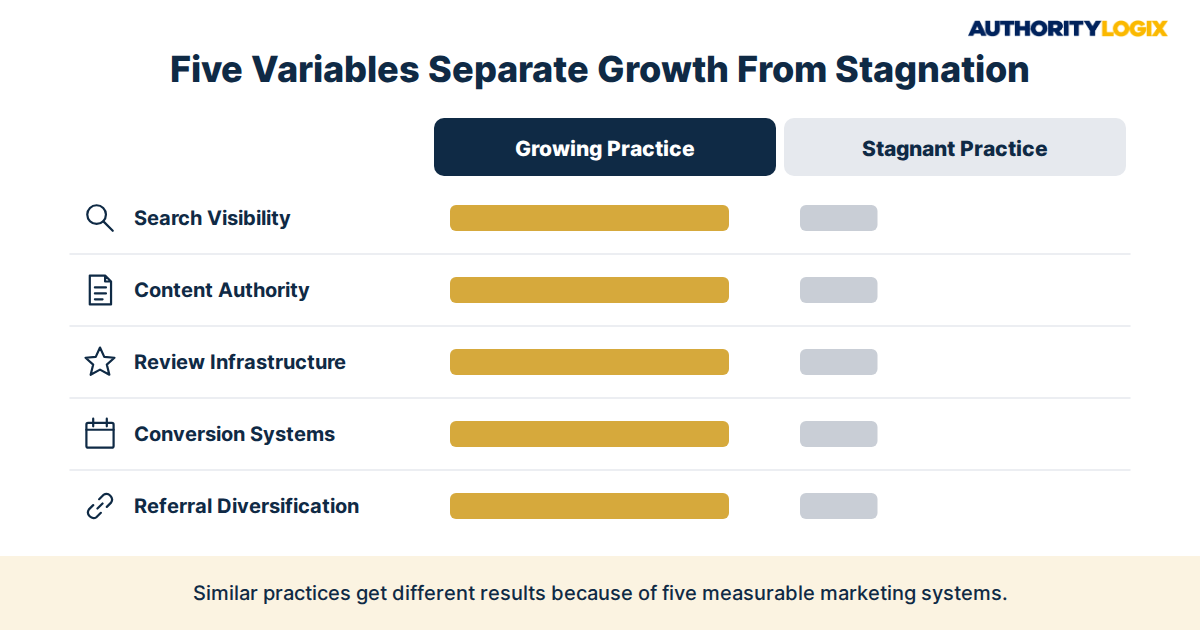
- Physical therapy practice growth differences between two clinics with identical clinical capabilities almost always trace to five specific variables: search visibility, content authority, review infrastructure, conversion systems, and referral diversification — not clinical quality.
- Stage 3 authority-led organizations tend to generate the most sustainable patient growth.
- 55% of patients have walked away from a healthcare provider based on what they read online, per rater8’s 2026 Patient Choice Report.
- The visibility gap is the most commonly misidentified cause of physical therapy practice growth differences — often described as ‘not enough referrals’ when it is actually a digital authority gap.
- Physical therapy practice growth differences compound over time. A competitor who began publishing condition pages 18 months ago is in a compounding authority position that takes sustained investment to reach from a standing start.
- The five variables are not equally weighted. Search visibility is the single variable with the largest immediate impact on new patient inquiry volume.
- Closing physical therapy practice growth differences requires a sequenced investment strategy: local search visibility first, review infrastructure second, content authority third, conversion systems fourth, referral diversification fifth.
Table of Contents
Physical therapy practice growth differences between two clinics in the same market, with similar credentials and years in practice, are rarely explained by clinical quality. The practices that grow consistently in 2026 are the ones that have built the five visibility and authority infrastructure systems that determine whether patients find them, trust them, and choose them over competitors.
This article covers the five variables that explain physical therapy practice growth differences. The acquisition playbook covers the full patient acquisition pipeline — this article focuses specifically on the upstream visibility and authority variables that explain why two practices with the same clinical capabilities produce very different new patient inquiry volumes.
Physical Therapy Practice Growth Differences Variable 1 — Search Visibility
Search visibility is the most direct explanation for physical therapy practice growth differences in 2026. Stage 3 authority-led organizations tend to generate the most sustainable patient growth — and local search visibility is the infrastructure that keeps a practice at Stage 3. The visibility guide covers how local search authority is built.
The Visibility Gap Is Not Always Visible
A practice with a full schedule built on physician referrals may not realize it is invisible in local search — because patients are arriving through channels that do not depend on search rankings. The practice discovers the visibility gap when a referring physician retires or a corporate PT chain opens in the service area. Per 2026 Forbes healthcare marketing analysis, visibility without alignment creates activity, not growth.
The local search system connects GBP optimization, location page architecture, and citation consistency into the unified local authority infrastructure. Fixing any one piece in isolation rarely closes the visibility gap on its own.
Explore the AuthorityLogix PT Practice Authority and Growth Blueprint for physical therapy practices.
Variable 2 — Content Authority
How Content Authority Explains Physical Therapy Practice Growth Differences
Content authority explains physical therapy practice growth differences for patients researching whether PT can help their condition. Per healthcare marketing research, patients place more trust in providers with consistent branding — and consistent branding in the digital authority context means a consistent library of condition-specific, clinician-attributed content. The service vs condition article covers the specific page architecture — service pages as pillars, condition pages as cluster articles — that builds content authority systematically.
The content authority gap compounds over time because condition pages earn organic rankings that persist. The educational hub organizes the content architecture into the knowledge library structure that makes each new condition page findable by patients navigating the practice’s site from any entry point.
Variable 3 — Review Infrastructure
Review infrastructure explains physical therapy practice growth differences that are immediately visible to patients but invisible to the practice owner who has not audited their competitive review position. Per 2026 healthcare marketing research, 89% of patients look for online reviews before booking. Healthcare content with clearly identified medical reviewers sends stronger trust signals than anonymous content. The lead generation system connects review infrastructure to the post-visit review request workflow.
Variable 4 — Conversion Systems
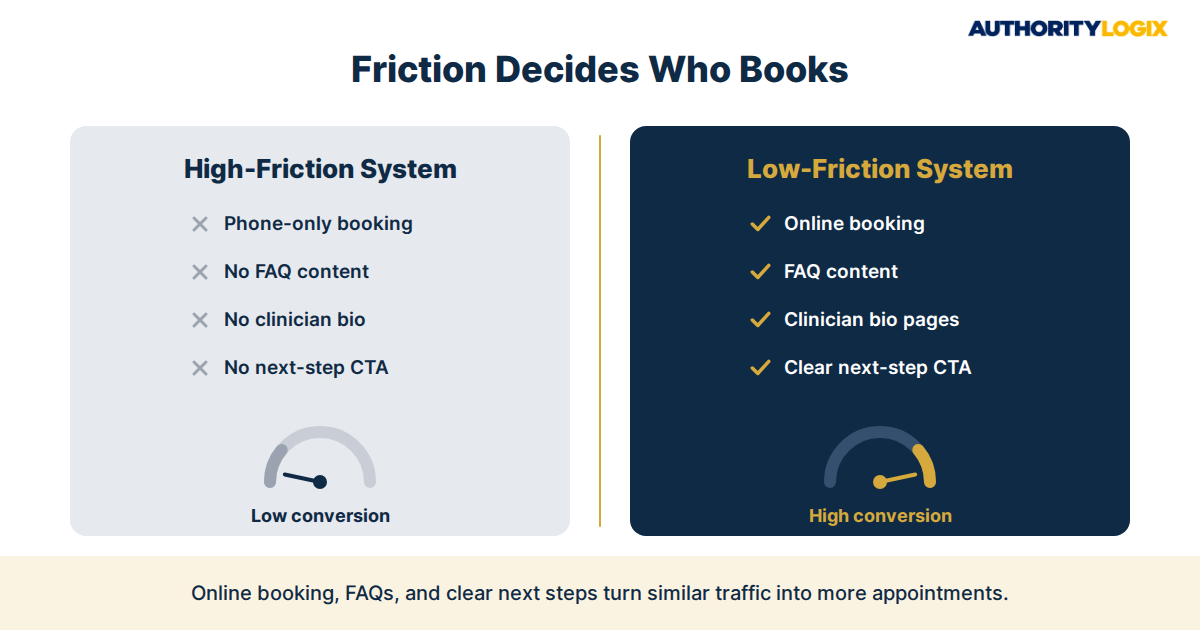
Conversion systems explain growth differences that occur after a patient has found the practice online and is ready to contact it. A practice with strong search visibility and compelling content but phone-only booking is losing patients at the conversion step. The content systems built for PT practices include the website conversion architecture — FAQ content, clear next-step CTAs, and the clinician bio page structure.
Variable 5 — Referral Diversification
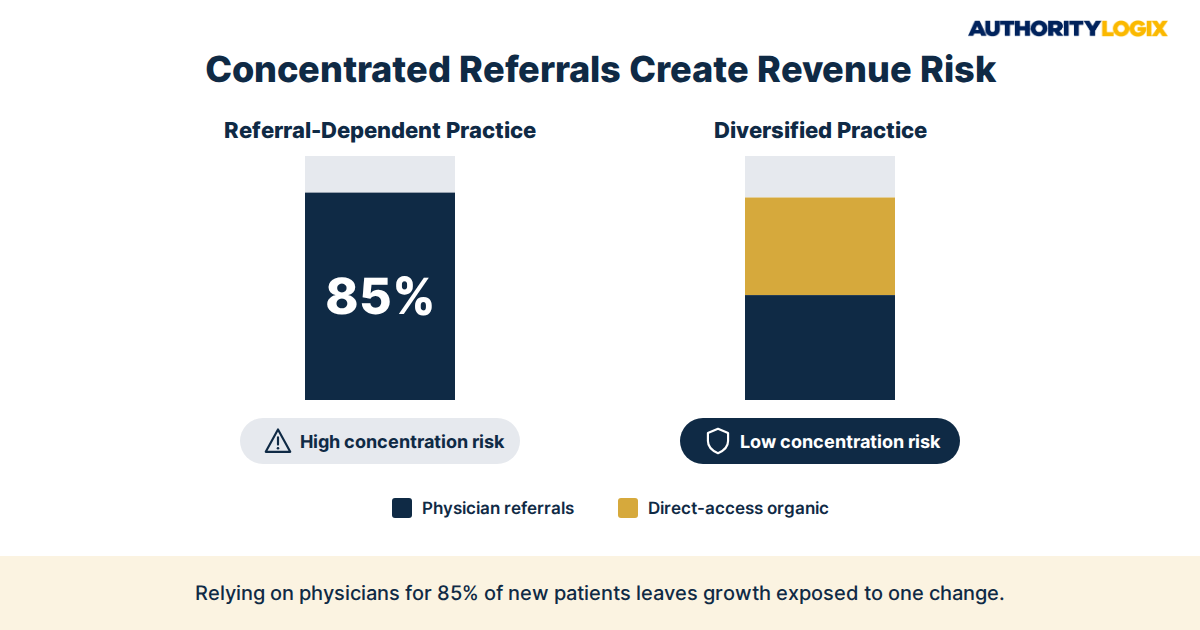
Referral diversification explains the most painful physical therapy practice growth differences: practices that have been growing on physician referrals and suddenly find growth stalling when a referring physician retires or a corporate chain opens nearby. A practice that generates 85% of its new patients from physician referrals has a revenue concentration risk that no amount of clinical excellence can hedge. The authority distribution system amplifies condition page content through external syndication — driving the direct-access patient inquiries that reduce physician-referral dependence.
Not sure which variables are limiting your PT practice growth?
Closing Physical Therapy Practice Growth Differences: The Sequenced Investment Strategy
Physical therapy practice growth differences cannot be closed by investing in all five variables simultaneously. The sequenced strategy: local search visibility first (30 to 60 days), review infrastructure second (60 to 90 days), content authority third (6 to 12 months), conversion systems fourth (60 to 90 days), referral diversification fifth (months 12 to 24). The keyword strategy article covers how keyword research connects to the content authority investment — ensuring each condition page targets a specific patient search query with measurable local demand.

Frequently Asked Questions
Can clinical quality alone explain physical therapy practice growth differences?
Rarely — and only in the narrow set of conditions where patient outcomes are directly measurable and patient-shareable. Clinical excellence is not visible to a direct-access patient who finds the practice through a Google search; digital authority signals are. The practice that combines clinical excellence with digital authority has the strongest possible growth position.
How long does it take to close physical therapy practice growth differences?
Review infrastructure gaps can show meaningful improvement within 60 to 90 days. Local search visibility gaps typically show measurable map pack ranking improvement within 30 to 60 days of GBP optimization. Content authority gaps require 12 to 24 months of consistent condition page publication to reach parity with an 18-month head start. The content playbook covers how to close that gap faster.
The PT industry hub demonstrates how the five-system framework coordinates investment across all five growth variables.
What is the most common mistake PT practices make when trying to close the growth gap?
Investing in content authority before closing local search visibility and review infrastructure gaps — producing condition pages that earn no search traffic because domain authority is too low to rank. The authority guide covers how content authority investment connects to local search and review infrastructure investments — including how condition page content amplifies GBP performance and review relevance simultaneously.
Ready to build the systems that separate the practices that grow from the ones that stall?