


Key Takeaways
- A physical therapy practice rebrand is worth considering when the name itself blocks growth: a merger, a confusing name, or a brand that no longer fits the practice.
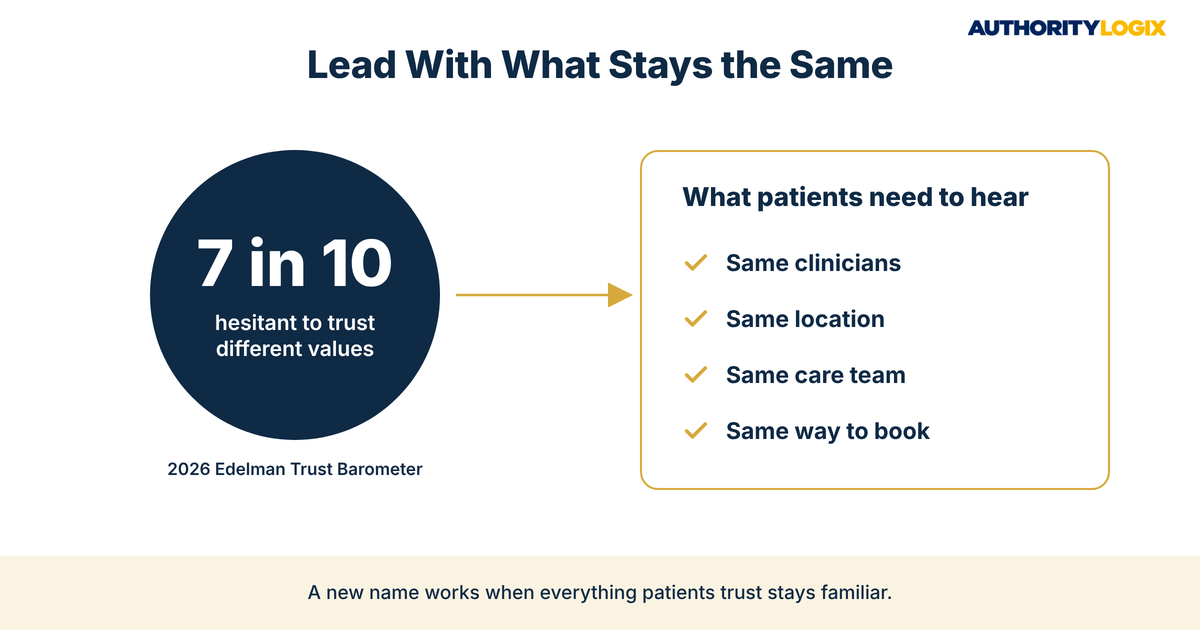
- The 2026 Edelman Trust Barometer found seven in 10 respondents unwilling or hesitant to trust someone with different values, backgrounds or information sources, so a new name must show that the people and the care have not changed.
- Physical therapy practice renaming works best with a name that is easy to say, spell and search, and that still fits when you add services or locations.
- A PT rebranding checklist puts the website, redirects, Google Business Profile and citations in a set order so search signals move with the name.
- PT rebrand patient retention depends on telling current patients and referring physicians first, in plain language, before the new sign goes up.
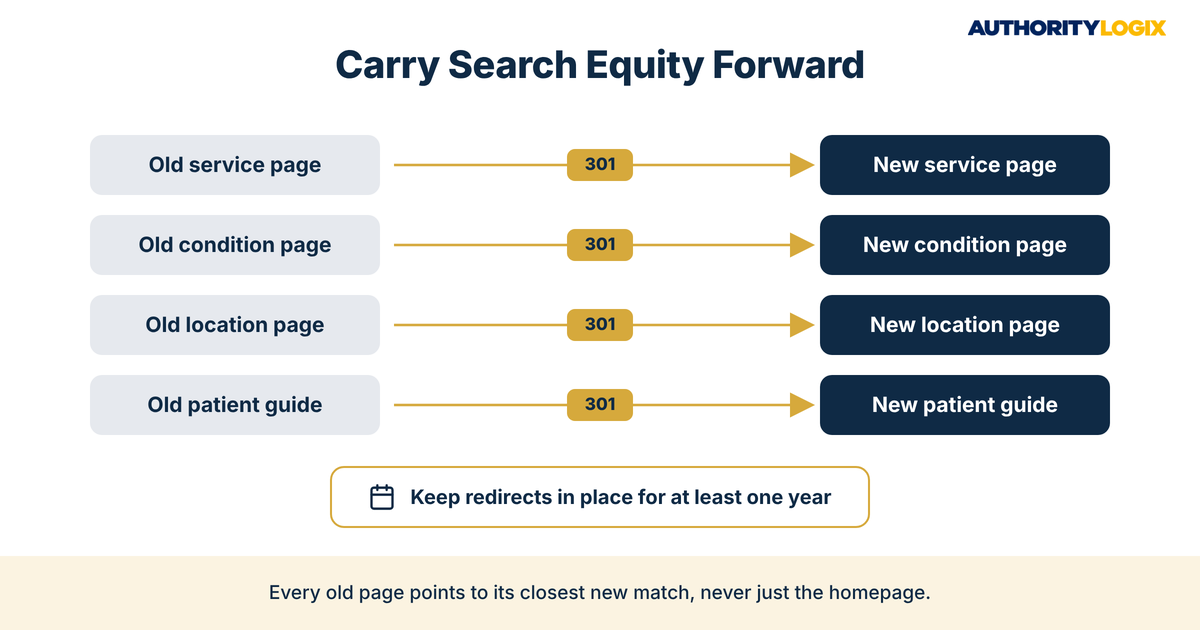
- Google’s John Mueller has recommended keeping a redirect in place for at least one year, which is why a physical therapy practice rebrand is a long project, not a launch day.
Table of Contents

When a Physical Therapy Practice Rebrand Is Worth Considering
A physical therapy practice rebrand is one of the few marketing decisions that can either reset your growth or quietly cost you patients you already earned. Most owners consider it for good reasons: the practice has outgrown its name, merged with another clinic, or added services the old brand never described. The risk is that a new name breaks the familiarity that brings patients back and keeps your patient acquisition pipeline moving.
The first question is not what the new name should be. It is whether the current name is actually the problem. A physical therapy practice rebrand solves a naming and positioning problem; it does not fix thin content, a weak Google profile or slow intake. If patients cannot find you today, a new logo on the same infrastructure leaves you just as invisible under a different name.
There are clear signals that a physical therapy practice rebrand is worth the effort. The most common ones:
- Two practices have merged and patients see two names for one team.
- The name ties you to one founder, town or service you have moved beyond.
- Patients regularly confuse your name with a nearby competitor.
- The name is hard to spell, pronounce or find in search.
If none of those apply, a refresh of the logo, colors and website may give you most of the benefit with far less risk. A full physical therapy practice rebrand earns its cost only when the name itself is holding back a recognizable brand that patients remember and recommend.
The best reason to change is sharper positioning. When the new identity tells patients exactly who you serve and why your clinicians are different, that differentiation starts doing work that ads and discounts cannot. Without it, a physical therapy practice rebrand is a costume change.
Timing matters as much as the reason. Avoid launching during a move or while key clinicians are leaving, because patients read every change as instability. Plan the physical therapy practice rebrand inside your wider PT marketing system so the website, listings, signage and messaging change together rather than piece by piece.
The Physical Therapy Practice Authority Growth Blueprint shows how brand, positioning and visibility fit together, so a physical therapy practice rebrand strengthens the authority you already built instead of starting over.
Why Patient Trust Is Fragile During a Name or Brand Change
Patients choose a physical therapist they trust, and that trust rests on familiarity: the same voice at the front desk, the same clinicians, the same sign on the same street. A name change interrupts the pattern.
Broader research shows how cautious people have become. The 2026 Edelman Trust Barometer, based on nearly 34,000 respondents across 28 countries, found that seven in 10 are unwilling or hesitant to trust someone with different values, backgrounds or information sources, with the U.S. at 70 percent. The same survey found trust concentrating among the people closest to respondents, at 64 percent for their neighbors. For a local practice, a physical therapy practice rebrand has to feel like the same neighbor with a new sign, not a stranger moving in.
That is why the message matters more than the logo. Patients need to hear, early and often, what stays the same: the clinicians, the location and how billing works. Practices that already publish clear patient guides have an advantage, because the clinical authority those pages carry moves to the new name when the same experts are visibly behind it.
Trust also breaks when the change looks rushed. Mismatched names across the website, Google profile, intake forms and voicemail make patients doubt they have the right practice. A physical therapy practice rebrand handled with care signals an organized team that plans ahead, which is part of why AuthorityLogix treats every rename as an infrastructure project rather than a design exercise.
The goal is continuity. If a returning patient searches the old name, lands on the new site, sees familiar faces and reads a short note explaining the change, the physical therapy practice rebrand becomes a non-event. If they hit a dead link or an unfamiliar page, it becomes a reason to look elsewhere.
Physical Therapy Practice Renaming: Choosing a Name That Lasts
Physical therapy practice renaming is where most owners spend too much time on taste and too little on function. A good name has to work on a sign, on a phone greeting, in a Google search and in a physician’s referral note. It should be easy to say, easy to spell and distinct from every other practice within driving distance.
Before any physical therapy practice rebrand goes public, run every shortlisted name through a few practical tests. Search it on Google and Maps in your area, check that a matching domain and social handles are available, and confirm with your attorney that it does not conflict with an existing business name or trademark.
Think about where the practice will be several years from now. A name tied to one town, one founder or one service can box you in again when you open a second location or add a new program. The strongest physical therapy practice renaming choices describe a promise or a place patients care about without limiting what you can add later.
Decide early how you will connect the old name to the new one. A short “formerly known as” line on the website, in patient emails and on printed materials for a set period helps returning patients and referrers connect the dots. Naming, positioning and the launch plan are part of our services, because a name that cannot be found in search is a name patients will not remember.
Not sure whether your current visibility can survive a physical therapy practice rebrand? The assessment shows where your name, listings and search signals stand today and what to protect first.
A PT Rebranding Checklist for Search, Signage, and Listings
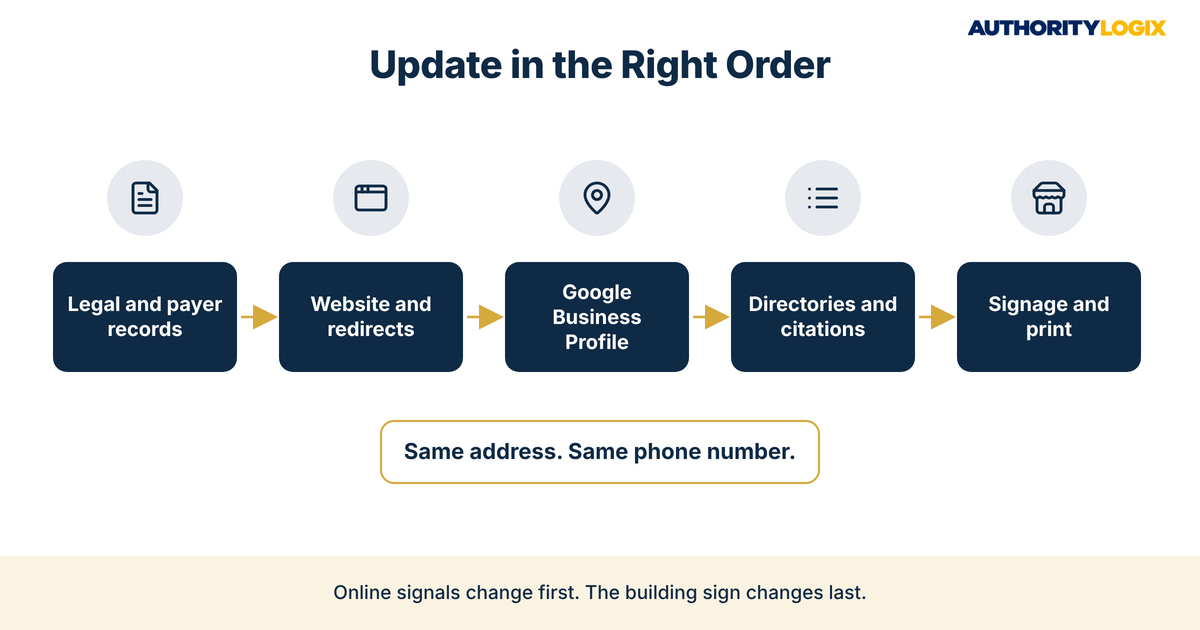
A PT rebranding checklist keeps the change organized so nothing patients rely on is left behind. The practice name lives in more places than most owners expect: the website, Google Business Profile, directory listings, payer and credentialing records, intake forms, signage and printed referral pads. Missing even a few of them leaves the old and new names competing.
| Item | What changes | When in the physical therapy practice rebrand |
|---|---|---|
| Legal and payer records | Business filings, payer and credentialing records | Before any public change |
| Website and redirects | New name or domain, every old URL redirected | Launch day |
| Google Business Profile | Name, logo, photos and description | Launch day |
| Directories and citations | New name everywhere, same address and phone | First weeks after launch |
| Referral materials | Referral pads, letters and physician office contacts | Before launch |
| Signage and print | Exterior sign, forms, cards and uniforms | Once online listings match |
Every line on the PT rebranding checklist needs an owner and a date. A shared spreadsheet is enough if someone checks each item off.
Updating Business Profiles and Citations in the Right Order
Order matters because search engines compare your name, address and phone number across the web. Update the website and Google Business Profile first, then the largest directories and health listings, then smaller local sites. Keeping the same address and phone number throughout protects NAP consistency, so the new name is read as the same practice rather than a new one.
Expect some lag. Directories update at different speeds, and some need manual correction. During a physical therapy practice rebrand, checking local search results for both names every week shows which listings still need attention.
Signage and print come last for a reason. The building sign should change once the online signals point to the new name, so a patient who sees the new sign and searches it finds a matching profile. That alignment is the core of local visibility during any change.
PT Rebrand Patient Retention: Communicating the Change to Current Patients
PT rebrand patient retention starts before the physical therapy practice rebrand is announced. Current patients should hear about the change from your team, not from a new sign in the parking lot. Tell them in person during visits, then follow with an email or letter that explains the new name, the reason for it and everything that stays the same.
Keep the message short and specific. Patients want to know whether their therapist is staying, whether their appointments and insurance are affected, and how to reach you. Answer those clearly and a physical therapy practice rebrand reads as news about a growing practice instead of a worry.
Use every touchpoint during the transition. Update the phone greeting to mention both names, add a note to appointment reminders and place a short explanation on the homepage. Past patients matter too: a well-timed message to people who finished care keeps the new name in front of them, which supports lead generation when they or their families need care again.
Messaging Physicians and Referral Partners About the Change
Referring physicians need their own message. A short letter or visit that explains the new name, confirms the clinicians and fax numbers, and includes updated referral pads keeps referrals from going to a name that no longer exists. One referring doctor retires and the pipeline dries up overnight, and a referral sent to a name their system no longer recognizes can have the same effect.
Gyms, employers and other partners deserve the same courtesy. Sharing the news through newsletters, social channels and partner emails is the job of authority distribution, and it gives PT rebrand patient retention a wider safety net than the front desk could build alone.
Protecting Search Visibility Through a Physical Therapy Practice Rebrand
Search visibility is the asset most often lost in a physical therapy practice rebrand. Years of ranking pages, reviews and backlinks point to the old name and often to the old domain.
Start with an inventory of every page that earns visits today: service pages, condition pages, location pages, blog articles and patient guides. Each one should move to a matching page on the new site with the same depth and the same answers. That inventory follows the discipline of content SEO, where every page has a job and a target search.
Redirects and Content That Carry Physical Therapy Practice Rebrand Equity Forward
Each old URL should point to its closest new equivalent with a permanent 301 redirect, not to the homepage. Google’s John Mueller, in the Ask Googlebot video series, recommended keeping a redirect in place for at least one year so that it has been seen a few times.
Content is what makes the new name credible to search engines. Publishing a clear announcement page, updating the about page and refreshing core service pages tells search engines and patients that the practice is the same and still active. Repeatable content systems make that possible without pulling clinicians away from patients.
AuthorityLogix’s own proof-of-concept, BKDSCR.com, shows why those pages are worth protecting. It was built from scratch with 18 pillar pages, 7 interactive tools and 48 blog posts, with zero paid ads, in under 18 months. Every one of those pages keeps working only as long as its URL resolves, and the same is true of your site during a physical therapy practice rebrand. Authority compounds, but only when it is carried forward.
FAQ: Rebranding Questions From Practice Owners
Will a physical therapy practice rebrand hurt my Google rankings?
It can for a period if redirects, listings and content are not handled together. A planned sequence gives the old signals the best chance of carrying over to the new name.
When should you rebrand your PT practice instead of refreshing it?
Rebrand when the name itself creates confusion, limits growth or no longer fits the practice. If the name works but the look feels dated, a refresh of the logo, website and patient materials, often paired with a stronger educational hub, can deliver more with less risk.
Will my appointments or insurance change when my physical therapist’s practice rebrands?
A name change on its own does not change your therapist or your scheduled visits. Billing details depend on the practice’s payer records, so ask the front desk whether your statements will show the new name.
How long does a physical therapy practice rebrand take?
Plan for several months from the name decision to the full launch, and longer for directories and redirects to settle. Legal checks, listing updates and patient messaging usually take more time than the design work.
Where can practice owners find more guidance on visibility during a rename?
AuthorityLogix publishes practical guides on search, content and patient trust for practice owners. The full collection of PT resources covers the systems a rename depends on, from listings to patient education.
Ready to plan a physical therapy practice rebrand that moves your website, listings, referrers and patient trust to the new name without losing ground?
Launching the New Brand With Trust Intact
A physical therapy practice rebrand succeeds when patients barely notice the risk you managed. The clinicians, the care and the location carry the trust; the new name simply gives that trust a clearer label.
Sequence is everything. Decide whether the name is truly the problem, choose a name that lasts, tell patients and physicians first, move listings and redirects in order, and keep publishing under the new name. That is our process for practices that want a physical therapy practice rebrand to strengthen what they built rather than reset it.
The honest answer is that a new name rarely creates trust on its own. The trust already lives in your team and your patient relationships, and the real work is building the infrastructure that carries it across the change.