


Key Takeaways
- Sports physical therapy marketing works when coaches, parents, athletic trainers and athletes can see a practice’s sports expertise before an injury happens, not only after one.
- PT sports injury content explains warning signs, when an evaluation makes sense and what a first visit involves, without diagnosing readers or promising return-to-play dates.
- A seasonal publishing plan built around preseason, in-season and offseason questions keeps sports physical therapy marketing relevant all year.
- Athlete patient acquisition PT programs reach teams and clubs through useful education for coaches and parents, backed by local pages that answer sports injury searches.
- Sports medicine referral content gives physicians and athletic trainers something clear to share, which makes sending an athlete to your practice easy.
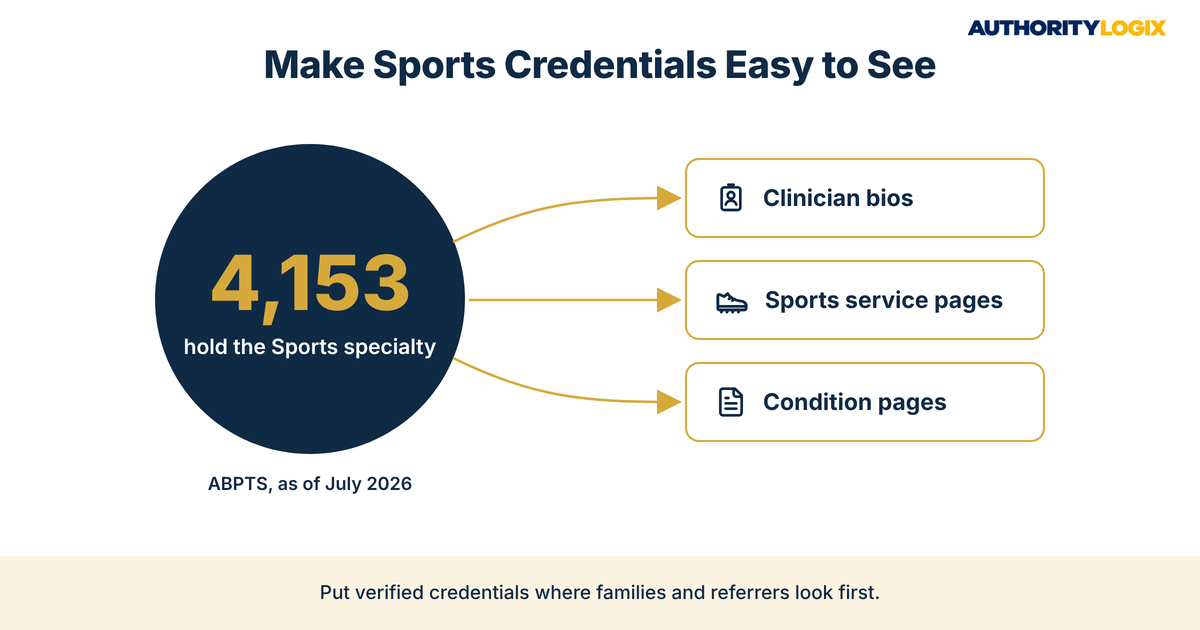
- According to ABPTS, as of July 2026, 4,153 individuals hold board certification in the Sports specialty, a credential that deserves clear placement in sports physical therapy marketing.
Table of Contents
Why Sports Physical Therapy Marketing Depends on Trust From Coaches, Parents, and Athletes
Sports physical therapy marketing has a trust problem that most practices never name. The parents, coaches and athletic trainers who decide where an injured athlete goes already have a short list in mind, and a clinic with years of sports experience is often not on it. The practices that win athletes consistently treat patient acquisition as a system that starts long before anyone gets hurt.
Your clinicians may have worked sidelines, treated runners through a full training cycle and built careful return-to-sport plans. A parent searching late at night sees none of that unless your website and Google profile show it. If those pages read like every other clinic in town, the practice is credible but invisible to the people making the call.
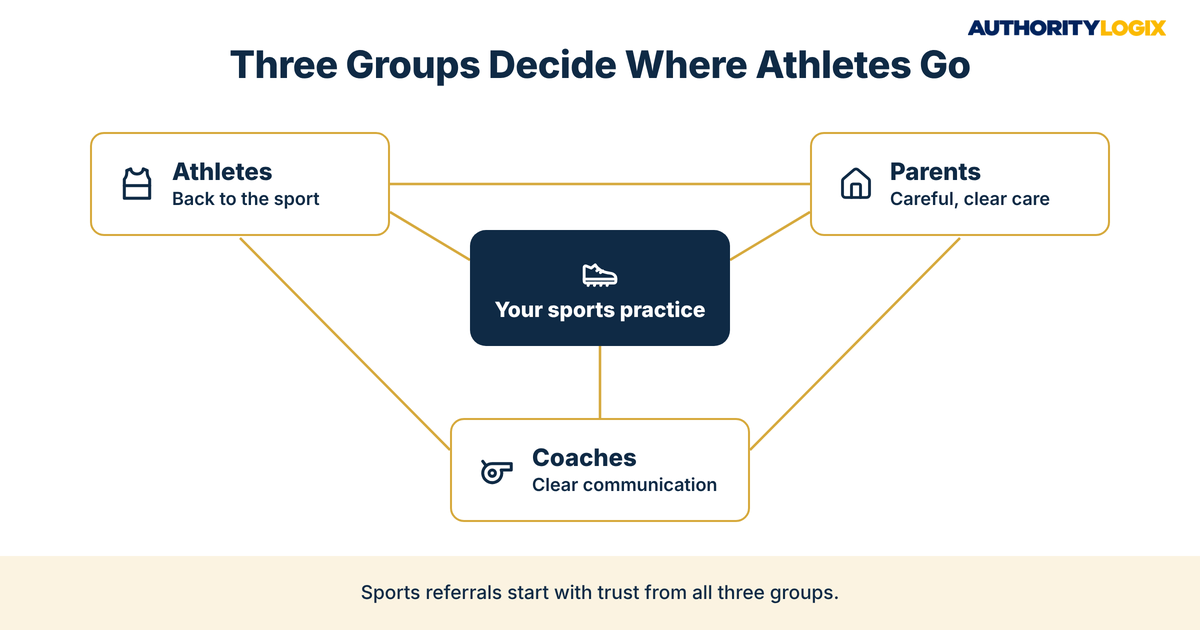
Trust in sports care runs through three groups at once. Athletes want to get back to their sport, parents want confidence that the clinic will be careful with their child, and coaches want someone who communicates clearly. Sports physical therapy marketing has to speak to all three, which is where generic PT marketing falls short: it talks to adults with back pain and assumes athletes will find their own way in.
Coaches and club directors are the most underused audience in sports physical therapy marketing. They see athletes every day, hear about sore shoulders and tight hamstrings before anyone books an appointment, and are often the first adult an athlete asks. A practice with a steady community presence at games, tournaments and preseason meetings becomes the name coaches mention without being asked.
None of this works as a one-off effort. Sports physical therapy marketing that earns referrals season after season is built on connected pieces: a website that shows real sports expertise, content that answers the questions families ask, and relationships with the adults around each team. That connected structure is the foundation of long-term authority growth, and it separates a clinic athletes find from one they have to be told about.
The Physical Therapy Patient Education & Clinical Authority Guide shows how to turn clinical expertise into patient education that builds trust, the same foundation sports physical therapy marketing depends on.
What PT Sports Injury Content Should Cover Without Giving Clinical Advice
PT sports injury content has one job: help athletes and families make a better decision about getting help. It explains common sports injuries in plain language, describes the signs that suggest an evaluation is worth booking, and shows what happens at a first visit. It does not diagnose readers, prescribe exercises or promise a return date, because those decisions belong in an evaluation, not on a web page.
The strongest sports physical therapy marketing content sits on sport and condition pages that live together on your site rather than scattered across a blog. A runner’s knee page, a throwing shoulder page and a return-to-sport page should link to each other and to a booking page. Together they form the sports section of an educational hub that search engines and parents can both follow.
Write for the person reading, not for other clinicians. A parent wants to know whether a sore elbow after pitching deserves attention, what the evaluation involves and how the clinic will keep the coach informed. Answer those questions honestly, point to an evaluation for anything specific, and keep claims about outcomes out of the copy.
Volume does not fix thin sports physical therapy marketing. Ten short posts about ankle sprains do less than one clear, well-organized page that answers what a family actually asks. Repeatable content systems make it practical to build those pages on a schedule, with your clinicians supplying the expertise and the system handling structure, formatting and publishing.
Seasonal Topic Calendars for School and Club Sports
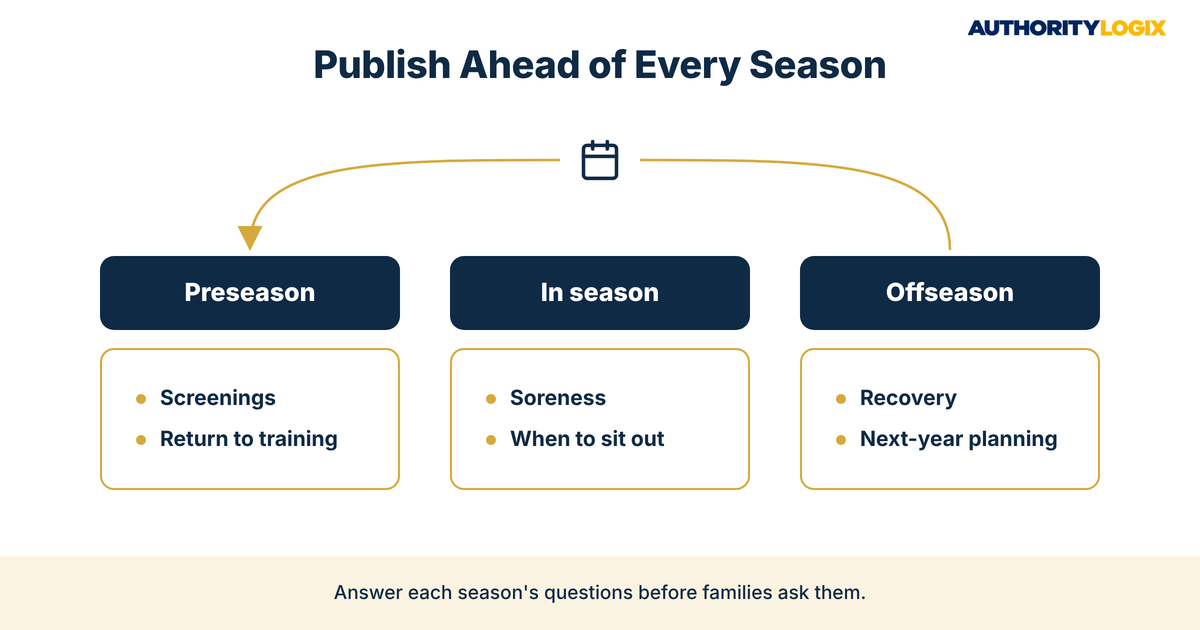
Sports have a rhythm, and sports physical therapy marketing should follow it. Preseason is when families ask about screenings and getting back into training after a break. In season, questions turn to soreness, overuse and when to sit out. The offseason brings questions about recovery and planning for the next year.
A seasonal calendar maps those questions to publishing dates a few weeks ahead of each season. Fall, winter and spring school sports each get their own preseason and in-season topics, and club sports that run most of the year get steady coverage in between. Each new piece adds to a growing library of PT sports injury content, the same way the guides in our resource library build on one another.
How Athlete Patient Acquisition PT Programs Reach Teams and Clubs
Athlete patient acquisition PT programs succeed when they give teams something useful before asking for anything. A preseason talk for parents on how the clinic handles sports injuries, a short guide for coaches on when to suggest an evaluation, or a table at a club tournament puts your clinicians in front of the people who make referral decisions. The goal is familiarity and trust, not a sales pitch on the sideline.
Each of those touchpoints needs a place to land. When a parent hears your name at a team meeting, they search for you that evening, and what they find decides whether they call. Sports physical therapy marketing works best when every outreach effort points to a specific sports page with a clear way to book, which is how lead generation turns a conversation at the field into an evaluation on the schedule.
Sports physical therapy marketing also needs numbers. Ask every new patient which team, club, coach or school sent them, and review those answers at the end of each season. Over time the answers show which programs deserve more of your time and which relationships need a different approach, so athlete patient acquisition PT work becomes a measured system instead of goodwill.
Local Search for Sports Injury Queries
Many sports injury searches are local. A parent types a phrase like sports physical therapy near me, or a sport plus the town name, and the results that appear first get the call. Strong local search foundations, including an accurate Google Business Profile, sport-specific service pages and reviews that mention athletes, help put your practice among those results.
A location page that names the schools, clubs and leagues near each clinic, and explains how the practice works with athletes in that area, gives both search engines and families a clear signal. Sports physical therapy marketing that ignores local search leaves those families to choose whichever clinic happens to rank first.
Not sure whether coaches, parents and athletes can find and trust your sports expertise online? The assessment shows where your sports physical therapy marketing has gaps and what to fix first.
Building Sports Medicine Referral Content That Physicians and Athletic Trainers Use
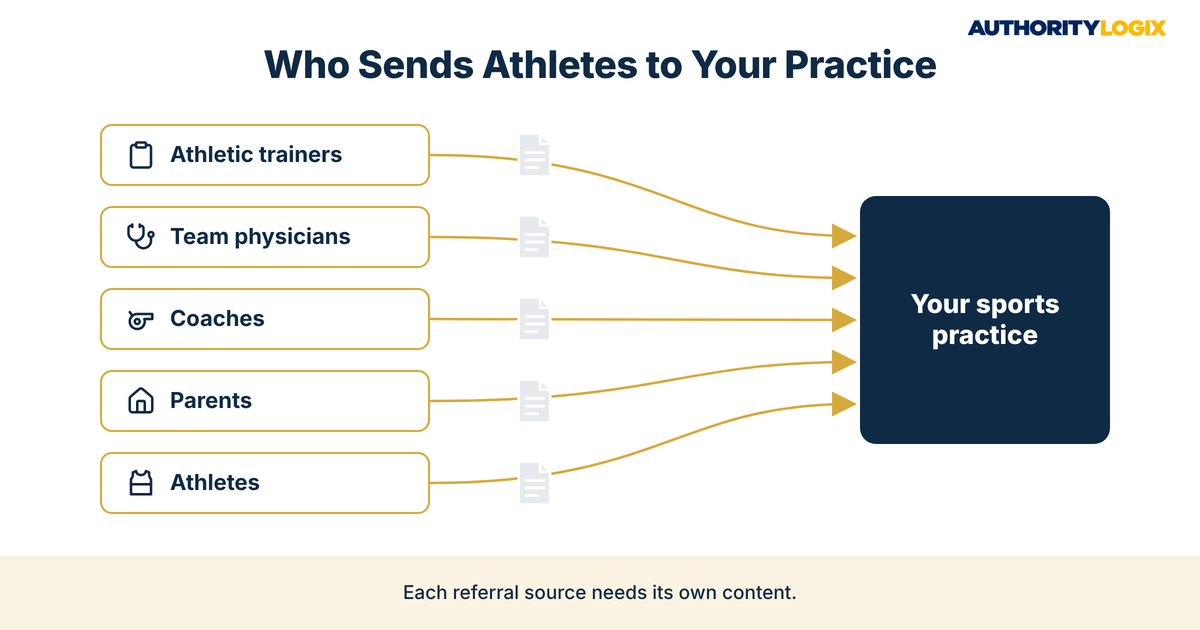
Sports medicine referral content is written for the professionals who send athletes to you: team physicians, orthopedic offices, primary care doctors who see young athletes, and athletic trainers at schools and clubs. These readers do not need injury basics. They need to know what your clinic does for athletes, how you share progress and how quickly you can see someone.
Practices that earn steady referral partnerships make referring easy. A one-page overview of your sports services, a clear explanation of how updates reach the referring provider, and a dedicated booking path for referred athletes remove friction. When a busy athletic trainer can send an athlete without a phone call, they tend to do it again.
Each audience in sports physical therapy marketing needs something different from your content. The table below maps the main referral audiences to what they want to know and the sports medicine referral content that serves them.
| Referral audience | What they need to know | Content that serves them |
|---|---|---|
| Athletic trainers | Availability, communication and how return-to-sport plans are coordinated | Referral one-pager, dedicated booking link |
| Team and orthopedic physicians | Your sports services and how updates reach them | Provider overview page, update process summary |
| Coaches and club directors | When to suggest an evaluation | Short coach guide, preseason talk |
| Parents | What an evaluation involves and how care is coordinated | Parent FAQ page, first-visit guide |
| Athletes | What happens next and who to contact | Sport-specific pages in plain language |
Sports physical therapy marketing content only works if it reaches the people it was written for. Share it at school meetings, email it to the offices you work with, and keep it current on your site. That steady distribution keeps your practice visible between referrals, which is when most clinics fade from memory.
One honest warning: referral relationships in sports change quickly. An athletic trainer moves to another school, a club changes leadership, or a team physician steps away. One referring doctor retires and the pipeline dries up overnight. Sports physical therapy marketing that also reaches parents and athletes directly protects the practice when that happens.
How to Show Sports Credentials and Experience Credibly Online
Sports experience is only an asset when people can see it. Most clinic websites bury credentials in a short staff bio, list sports among a dozen services and show little evidence of work with athletes. Sports physical therapy marketing should do the opposite and put that experience where parents and referring providers look first.
Presenting Sports Certification in Sports Physical Therapy Marketing
Board certification is a clear, verifiable signal that families and referring providers can check. According to ABPTS data, as of July 2026, 45,398 individuals have achieved board certification as clinical specialists in physical therapy, and 4,153 hold the Sports specialty. If a clinician on your team holds that credential, explain what it means in plain language on their bio and on every sports page.
Credentials are only part of the picture. Describe the sports your clinicians know well, the teams they have supported with permission to say so, and how they work with coaches and athletic trainers. Avoid outcome claims and testimonials that reveal patient details, because specific, factual descriptions of experience build more trust than any promise.
Each credential and experience detail should sit on pages built to be found. Clinician bios, sports service pages and condition pages work together when they follow a clear structure, which is the approach laid out in the content SEO playbook. A credential that appears only in a PDF or a social post will not help a parent who is searching.
This is infrastructure work, and it is the kind of work behind AuthorityLogix. Its own proof-of-concept, BKDSCR.com, is a real estate investment education platform built with 18 pillar pages, 7 interactive tools and 48 posts, with zero paid ads, in under 18 months. The market is different, but the principle carries over to sports physical therapy marketing: visible expertise on well-structured pages earns trust that ads cannot buy.
Sports Physical Therapy Marketing FAQ
Do athletes need a doctor’s referral to see a physical therapist?
In many cases, no. According to APTA’s 2025 report on direct access, patients in all 50 states, the District of Columbia and the U.S. Virgin Islands have either provisional or unrestricted direct access to physical therapist services for evaluation and treatment, though some provisions tied to treatment without a referral still persist in a number of states. Practices that explain direct access clearly on their sports pages make the first call easier for families.
How do I know a sports physical therapy clinic is a good fit for my child?
Look for clinicians who describe specific experience with your child’s sport, explain how they communicate with parents and coaches, and set clear expectations at the first visit. A good clinic will not promise a return date before it has completed an evaluation.
What are the main referral sources for a sports physical therapy practice?
Athletic trainers, coaches, club directors, team physicians and orthopedic offices are the most common, along with parents who recommend a clinic to other parents. Each one needs different content, which is why sports physical therapy marketing works best as a coordinated system rather than a single campaign.
Can a small practice compete with large sports medicine groups for athlete referrals?
It can, when it is clear and specific. Large groups often have broad pages that cover every sport at once, while a smaller practice with focused sport pages, visible credentials and real community relationships can stand out to local families. Building that foundation is part of our services for practices that want sports referrals to grow steadily.
How long does sports physical therapy marketing take to show results?
Relationships with coaches and athletic trainers can start producing referrals within a season, while search visibility for new pages takes longer to build. The work adds up as each season brings more pages, contacts and reviews.
Ready to build the sports pages, coach and trainer resources and local visibility that turn your sports experience into steady athlete referrals?
Turning Season-by-Season Content Into a Reliable Athlete Referral Pipeline
Sports physical therapy marketing rewards practices that keep showing up. Every season brings new athletes, new parents and new coaches, and each one decides where to go based on what they have seen and heard. A practice that publishes for each season, stays in touch with referral sources and keeps its local visibility strong becomes the familiar choice over time.
The pipeline itself is simple to describe. Seasonal content answers family questions, sport and location pages capture local searches, referral resources make it easy for trainers and physicians to send athletes, and tracking shows what is working. That is our process for practices that want athlete referrals to rest on a system instead of a few relationships.
The honest assessment is that most sports-focused practices already have the experience athletes need. What they lack is a way for coaches, parents and athletes to see it before an injury happens. Build that visibility one season at a time, and sports physical therapy marketing stops being guesswork and becomes part of how the practice runs.